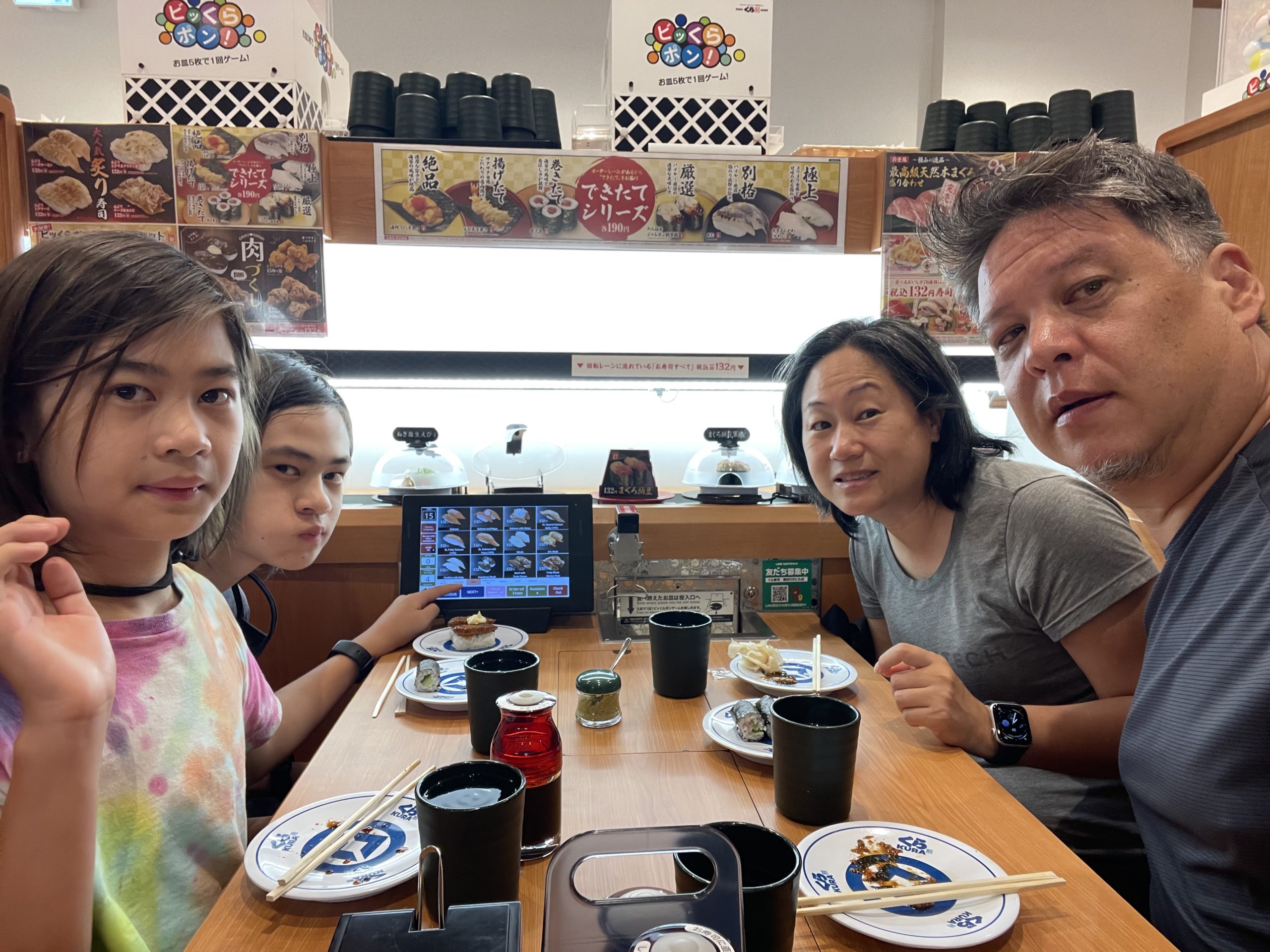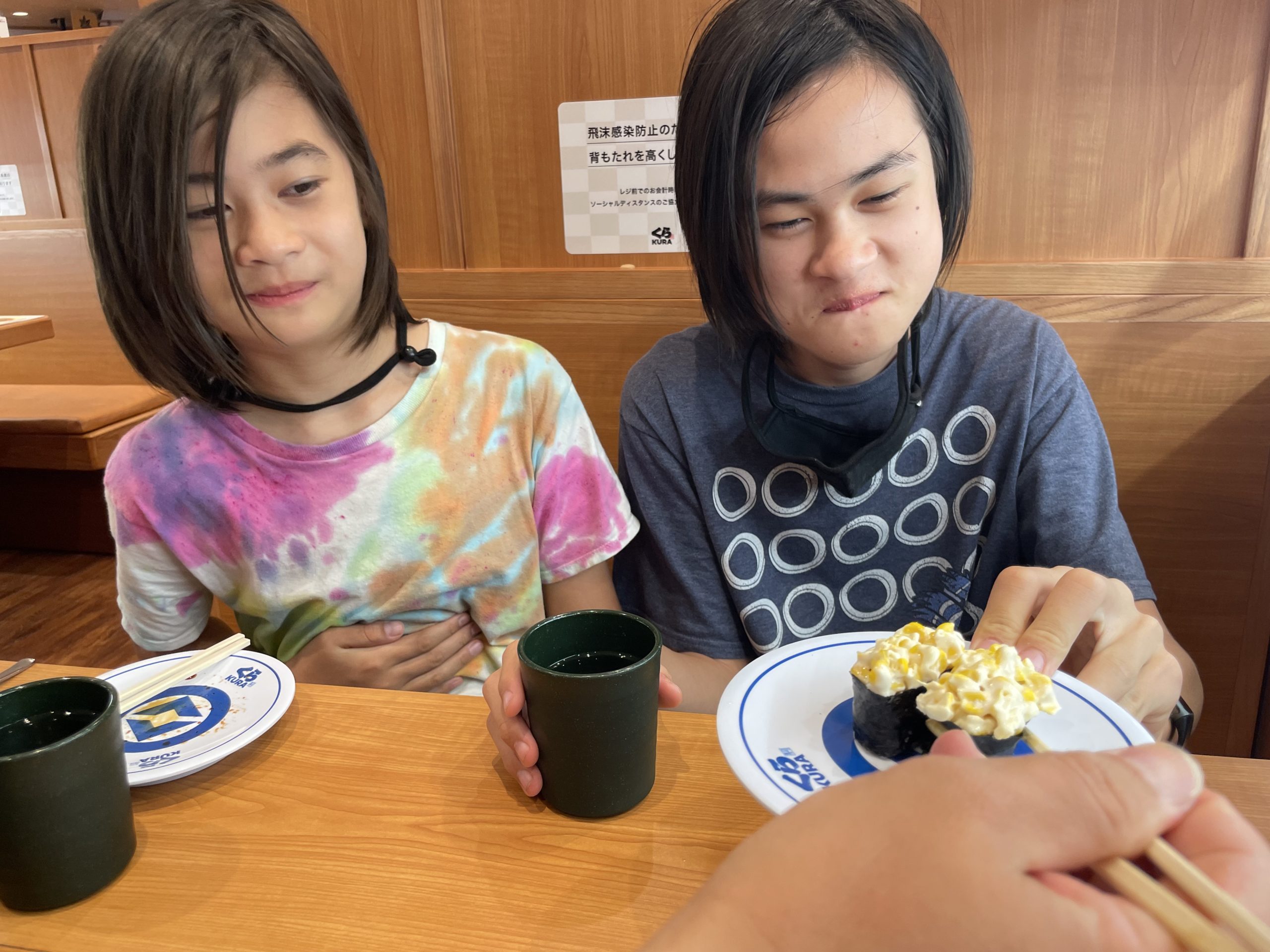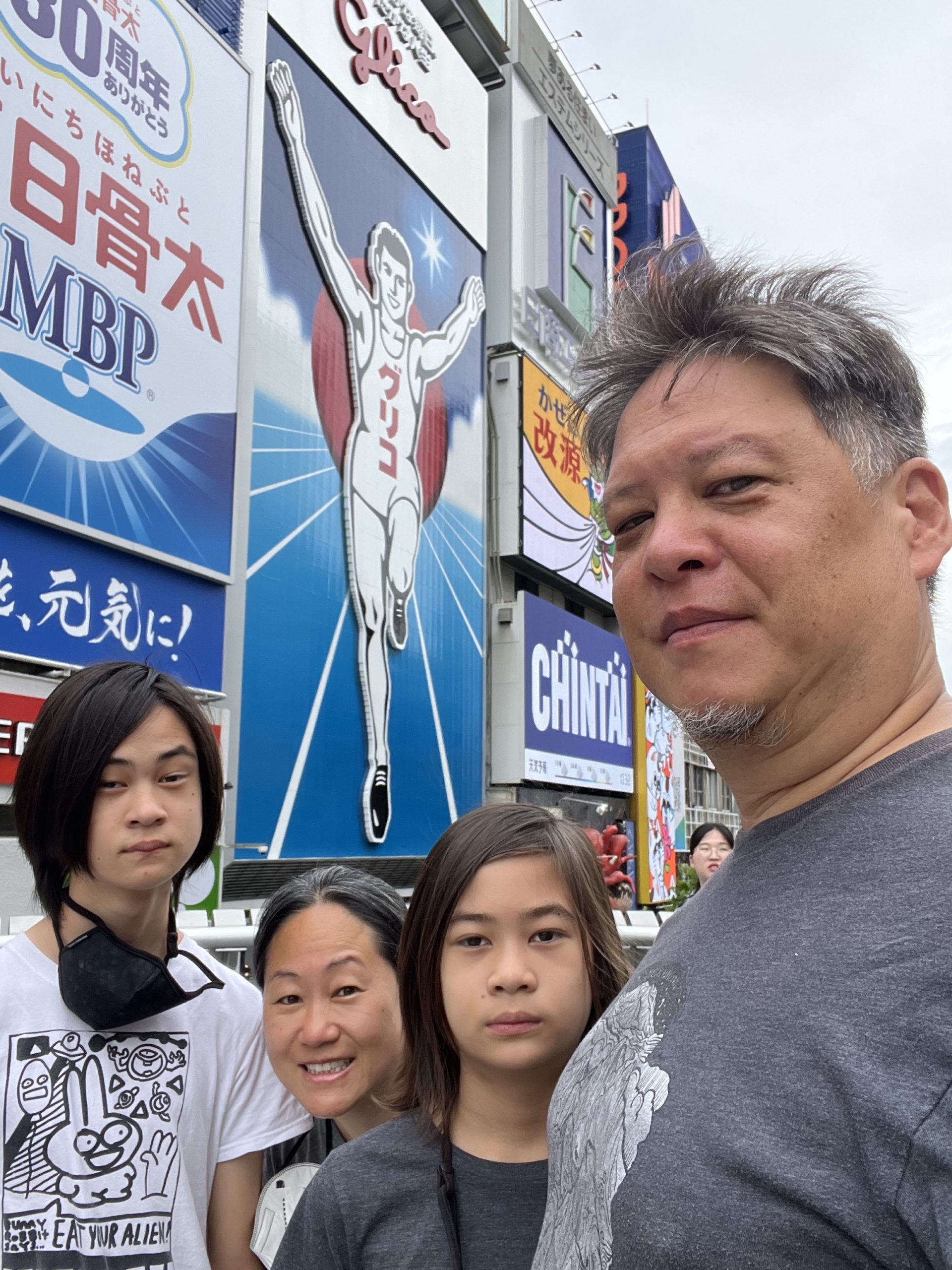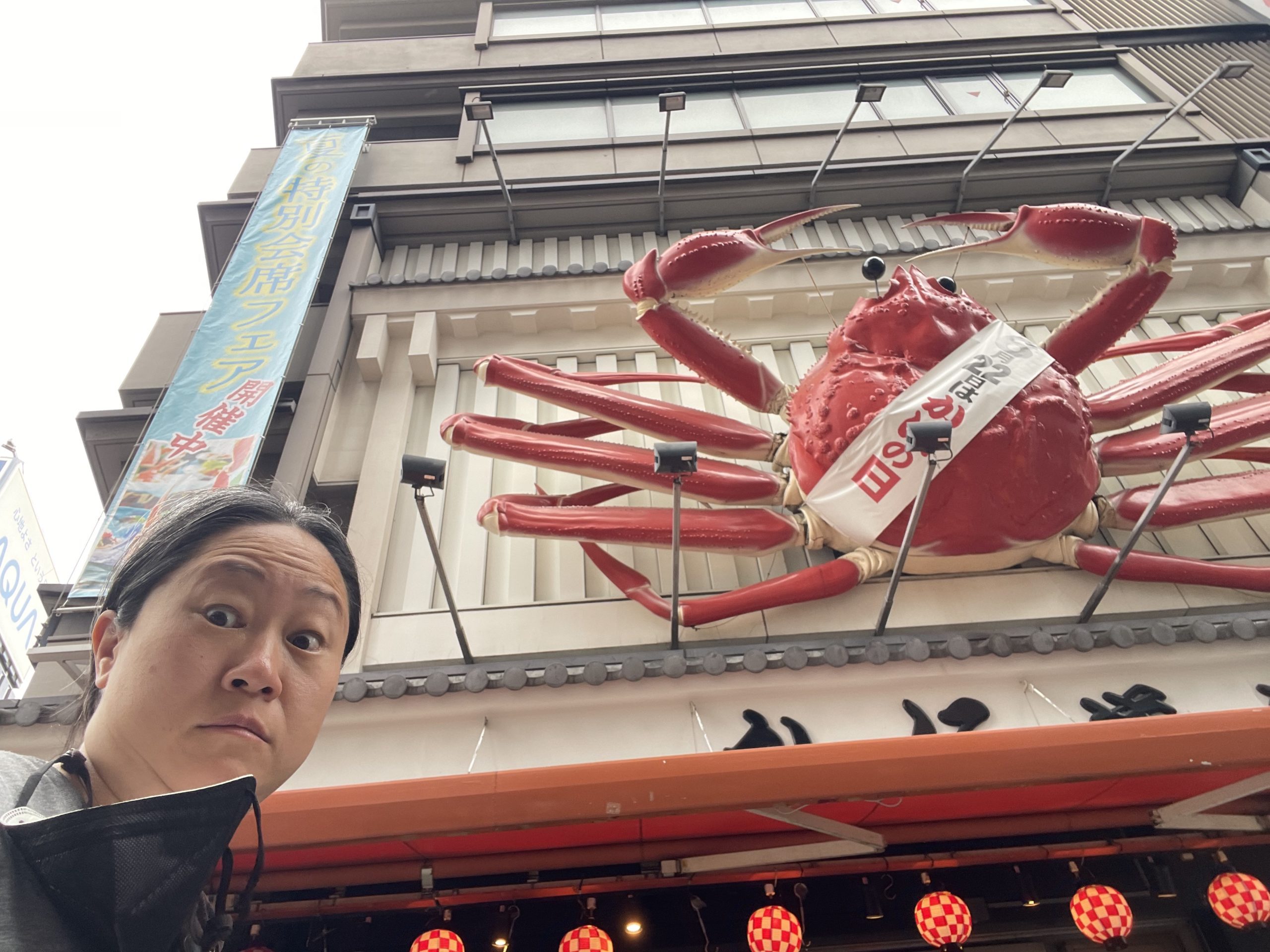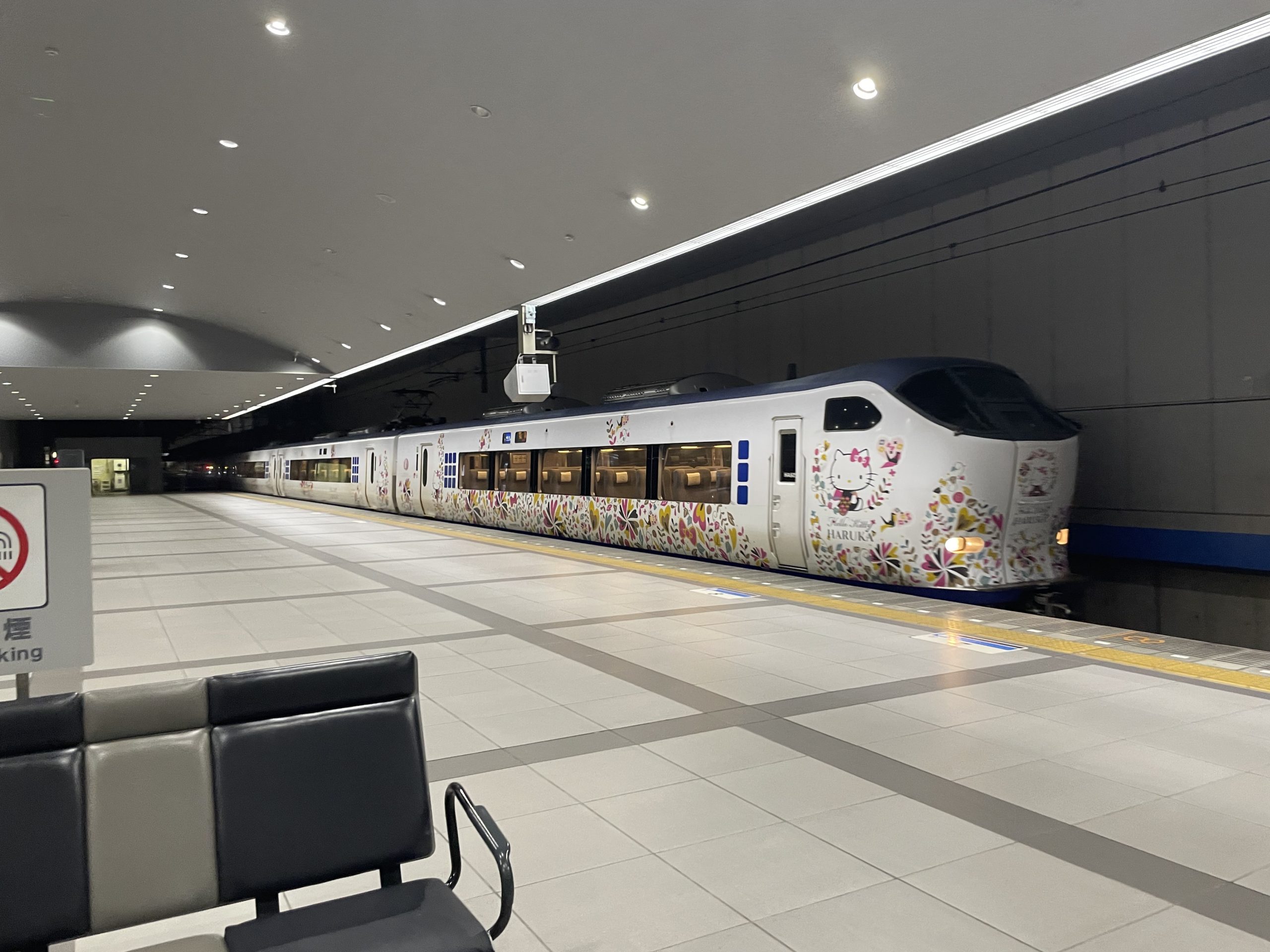
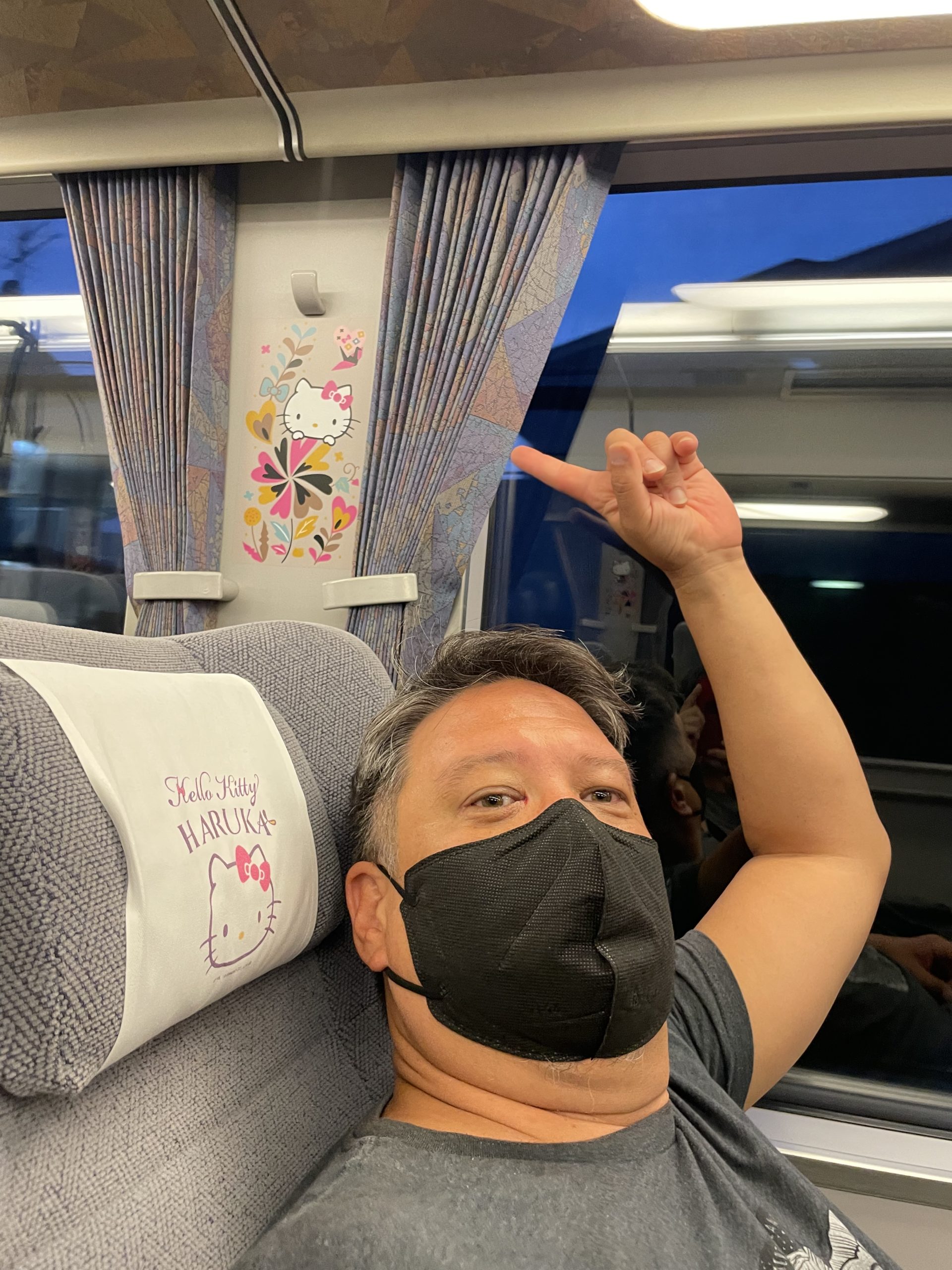
Korea/Japan (Part 1, Seoul)

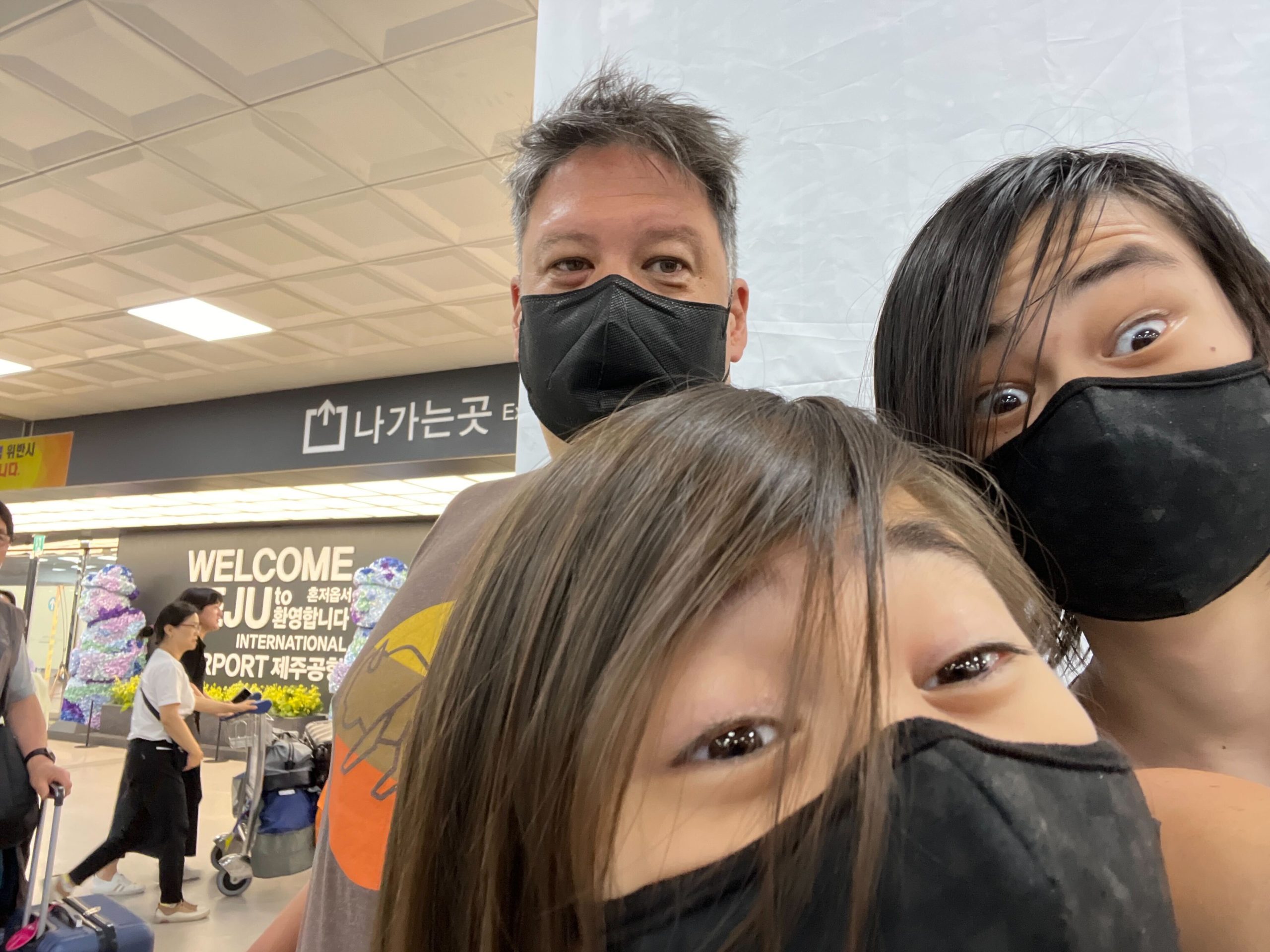
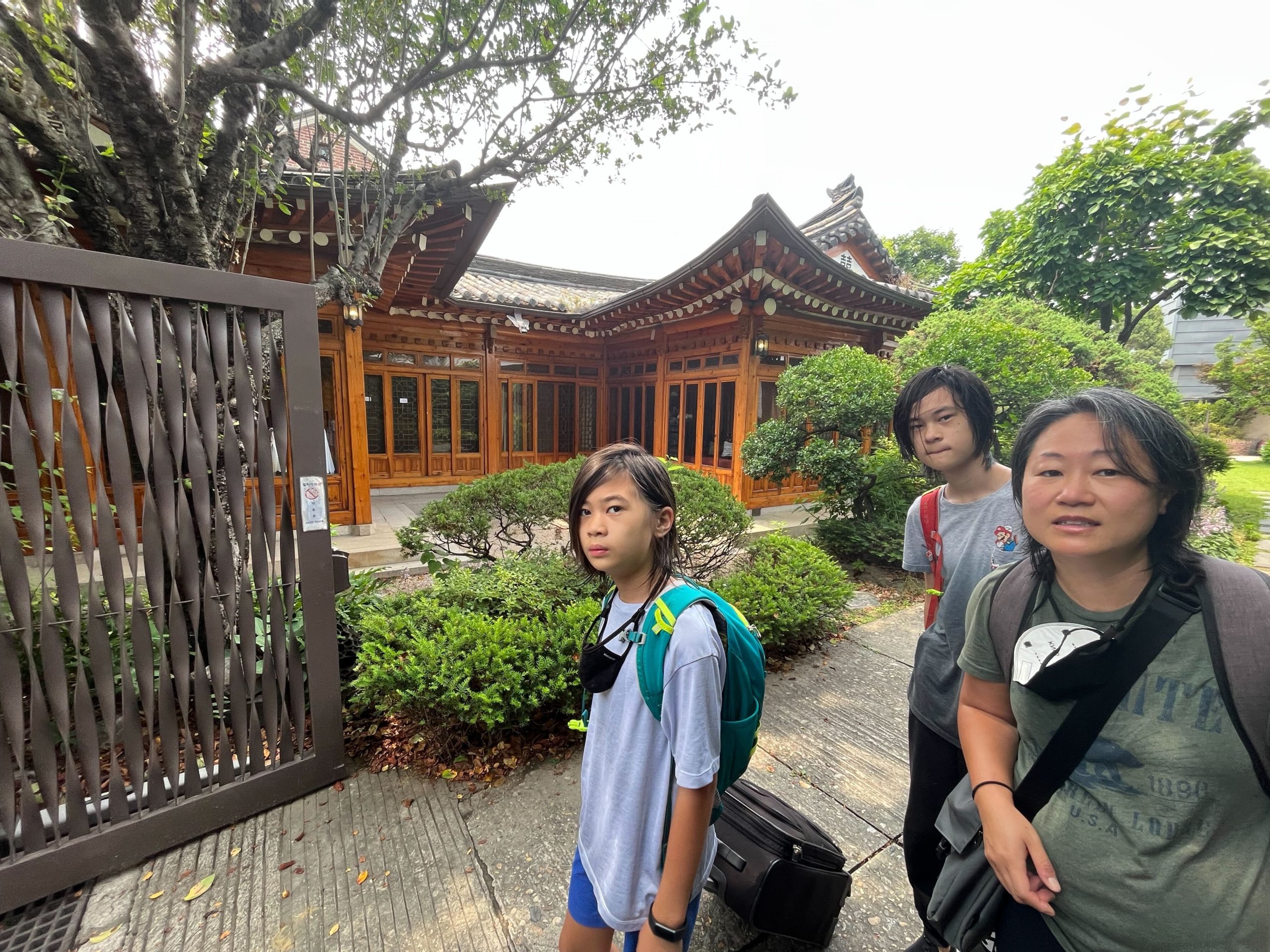
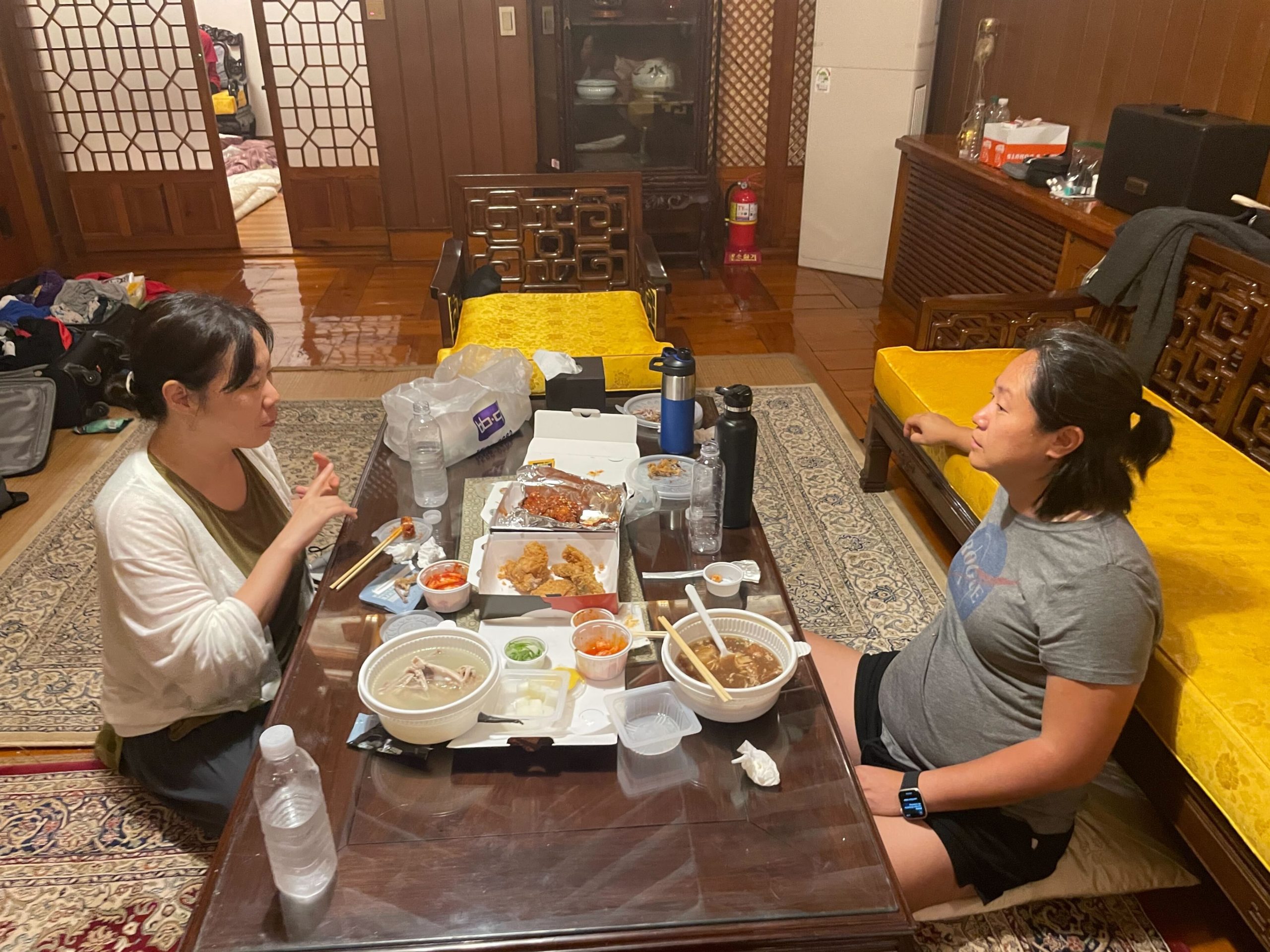
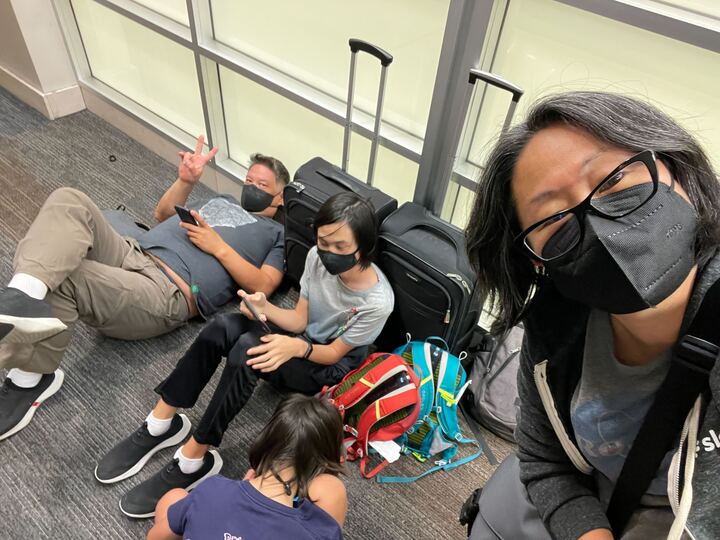
6/9 – We left at midnight between Wed/Thurs. arrived at 4am Friday, but couldn’t check in until after 2:30. We wandered around our hotel’s neighborhood for a while, and saw some neat stuff. A small park with some outdoor exercise gear (heavily in use by 6am), and a restaurant that was serving sit-down meals that was absolutely packed.

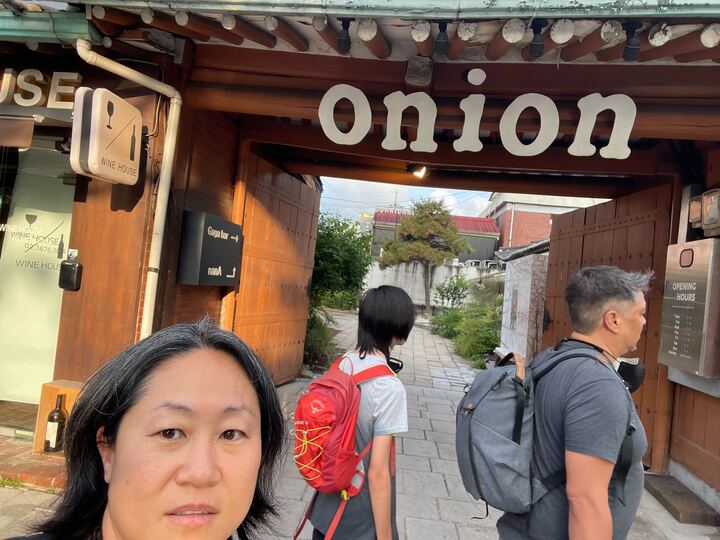
We ended up at a place called Cafe Onion, which had a neat variety of interesting pastries from traditional croissants to very un-traditional stuff. Their signature thing was a large bready canele-looking thing that was covered in a mound of powdered sugar. Delicious, and weirdly less sweet than I’d expected.

The place was PACKED by 7:30am – but weirdly, mostly with Japanese tourists? It’s probably in some K-drama that’s popular in Japan or something. But it was bizarre. Everyone in there was Japanese or white-ish.

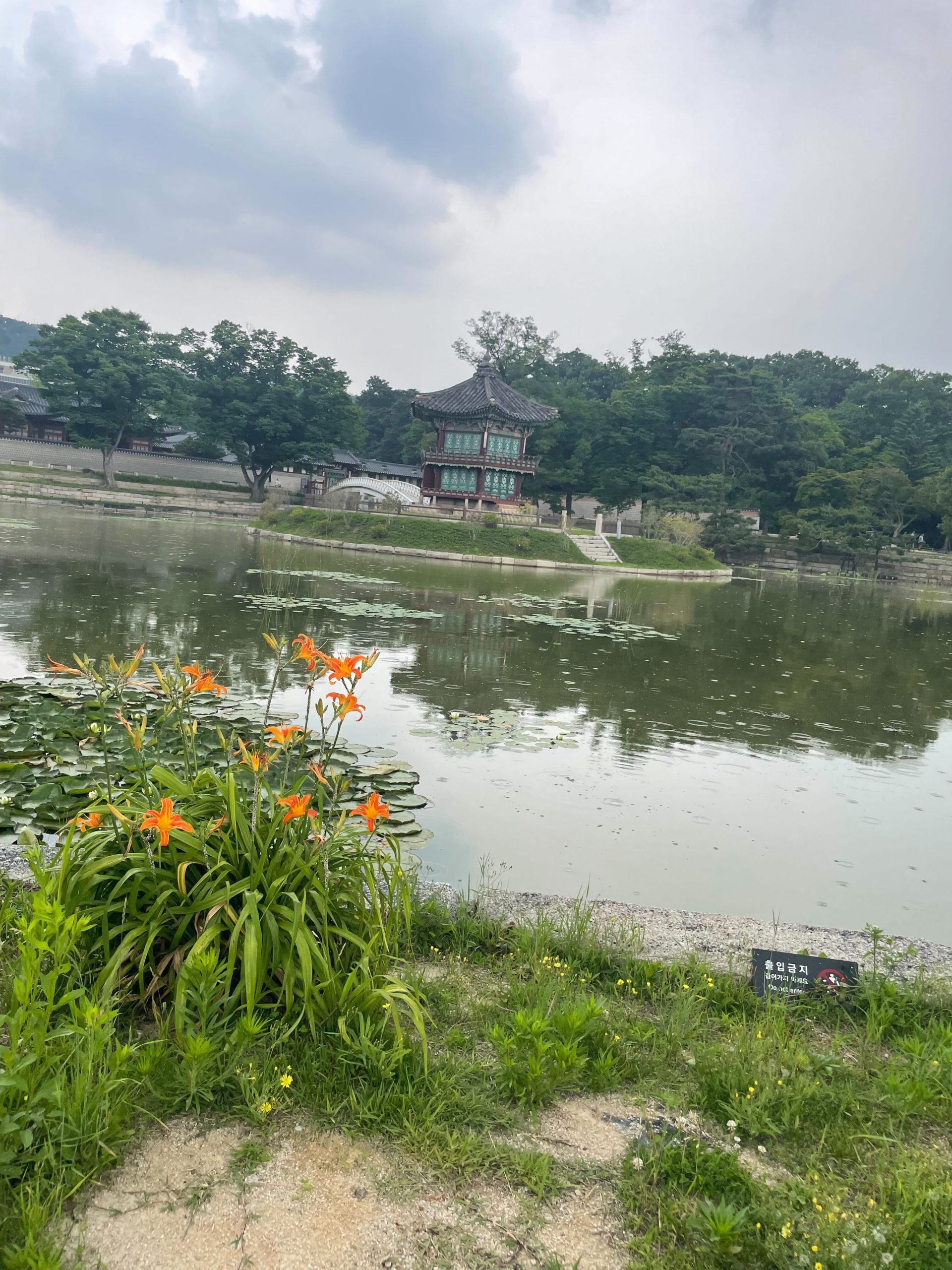
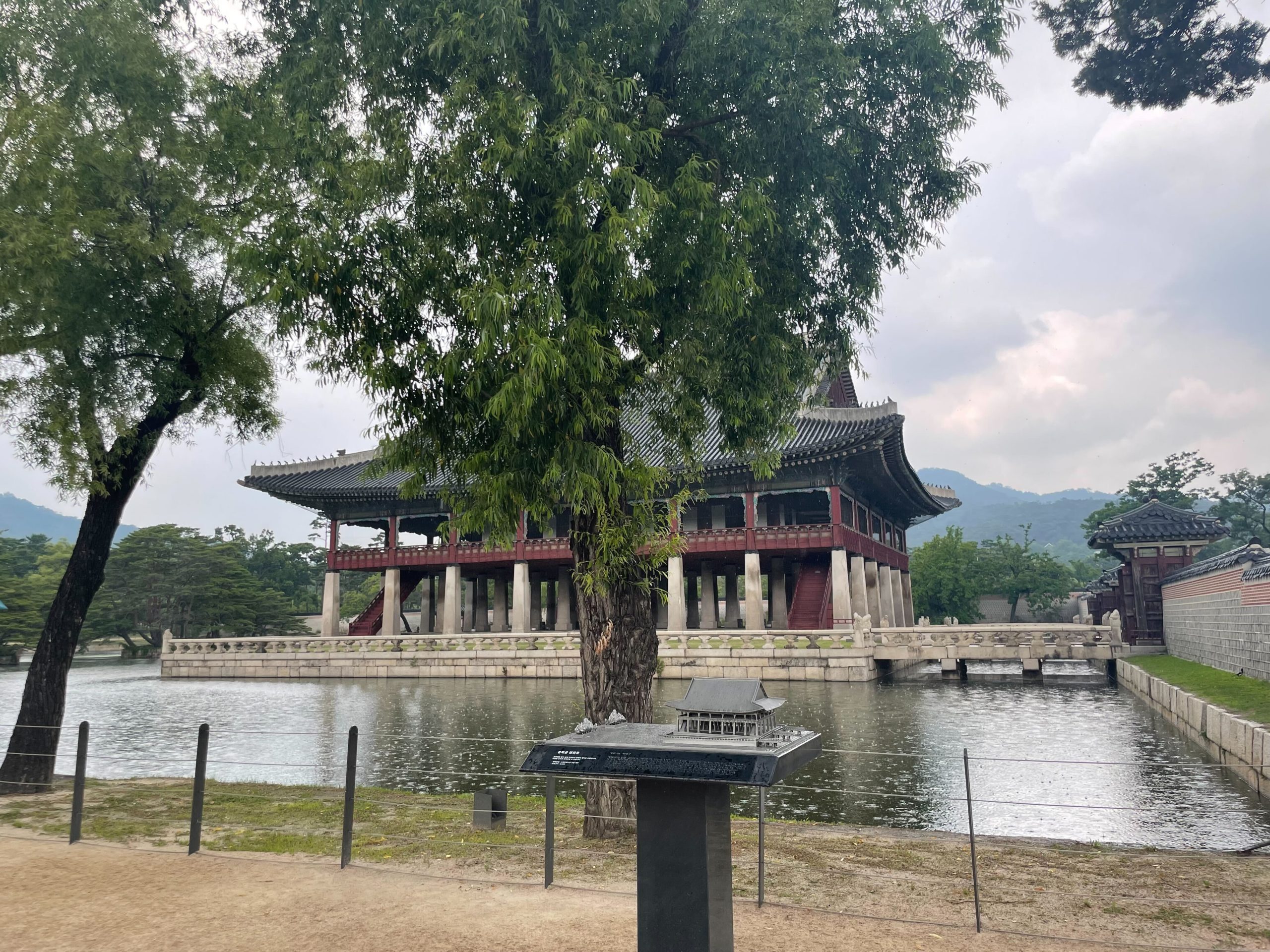
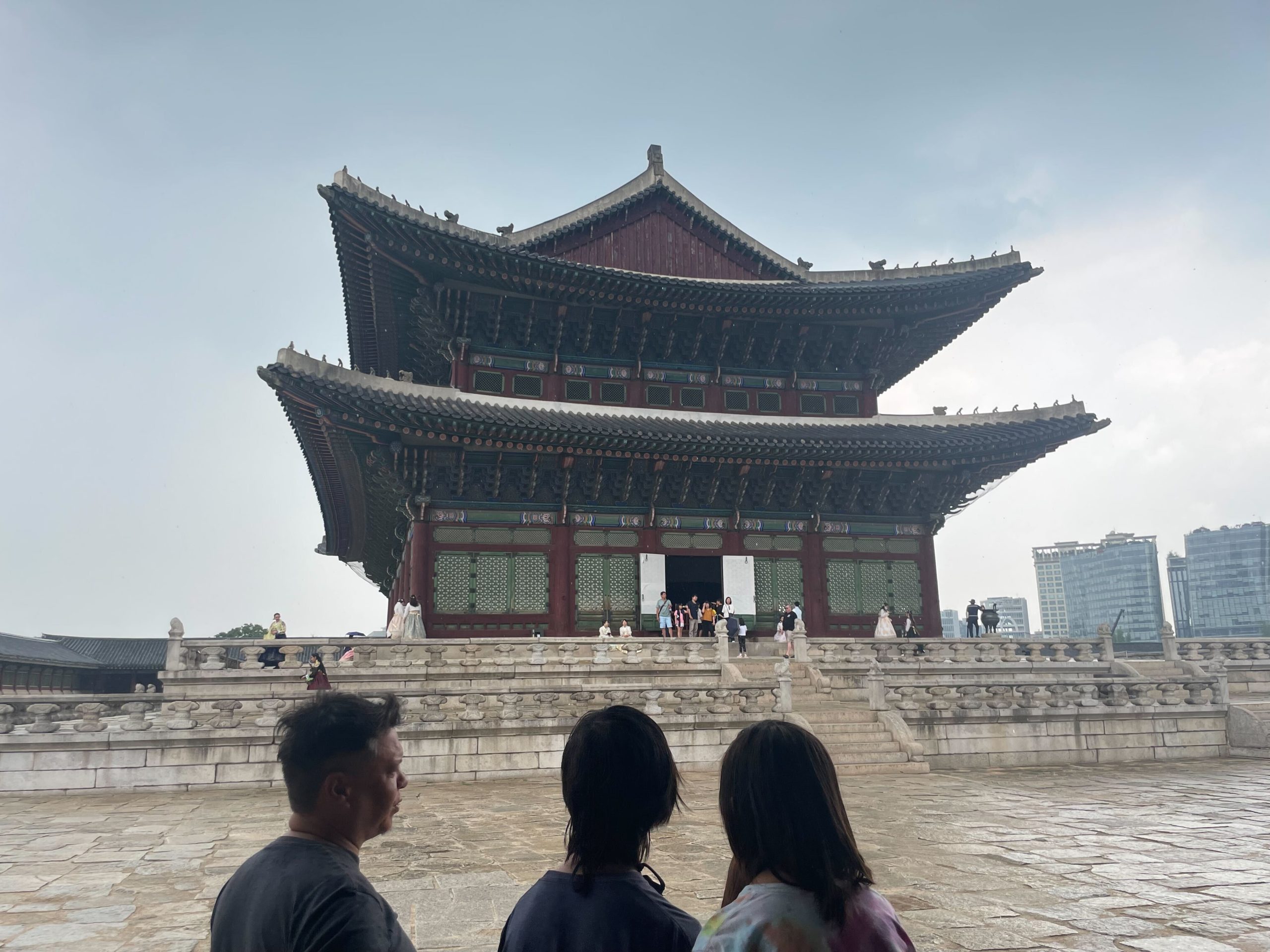
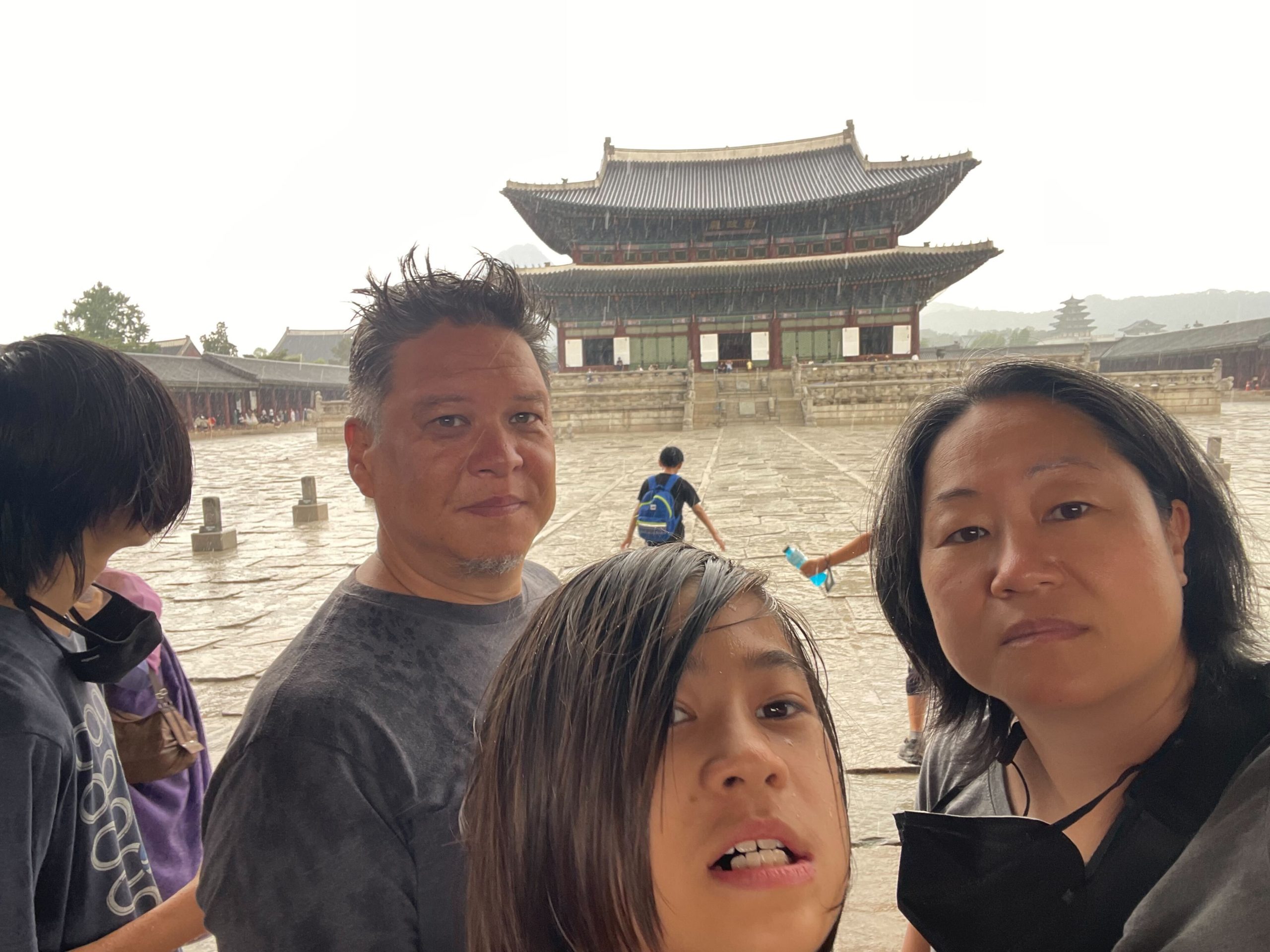
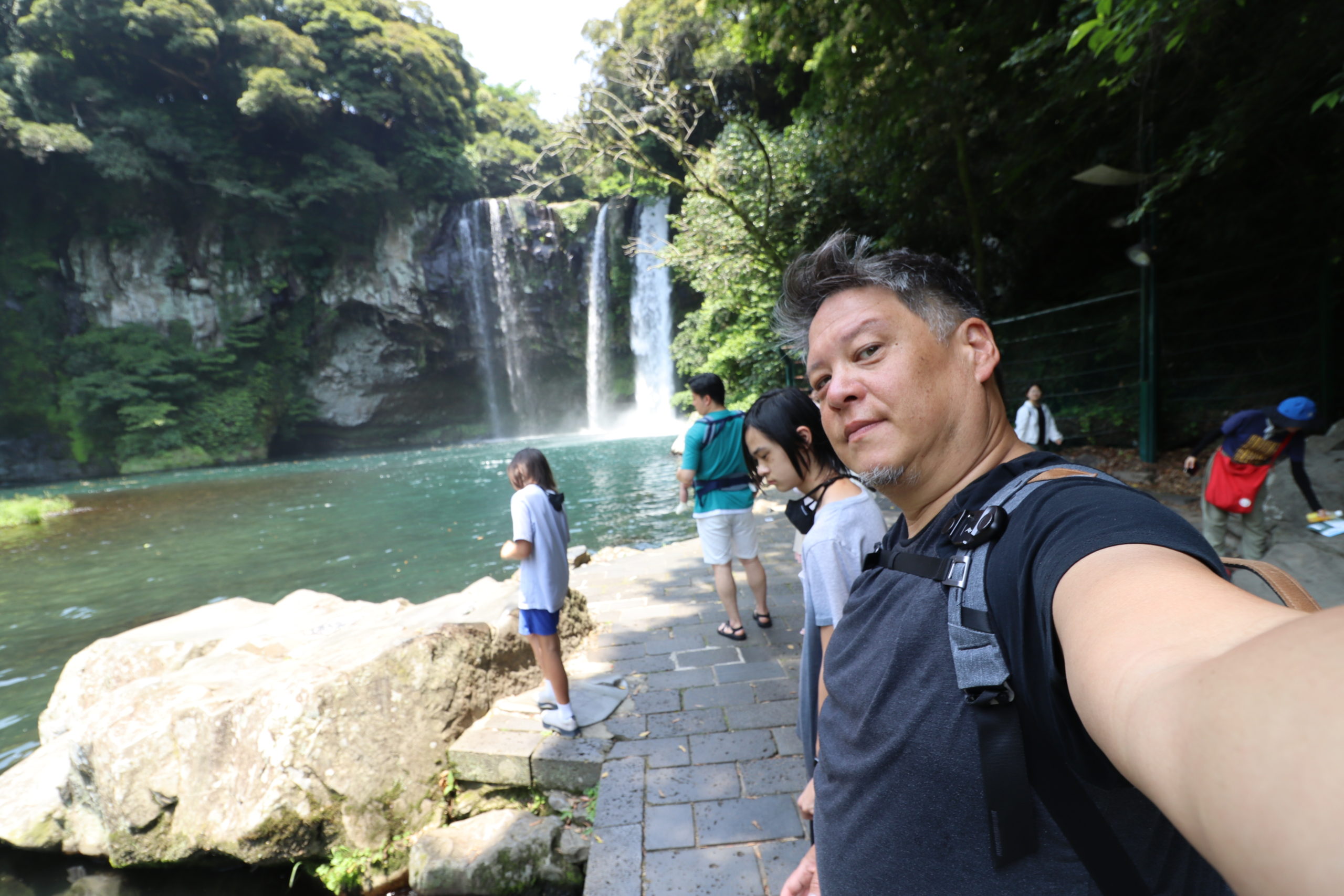
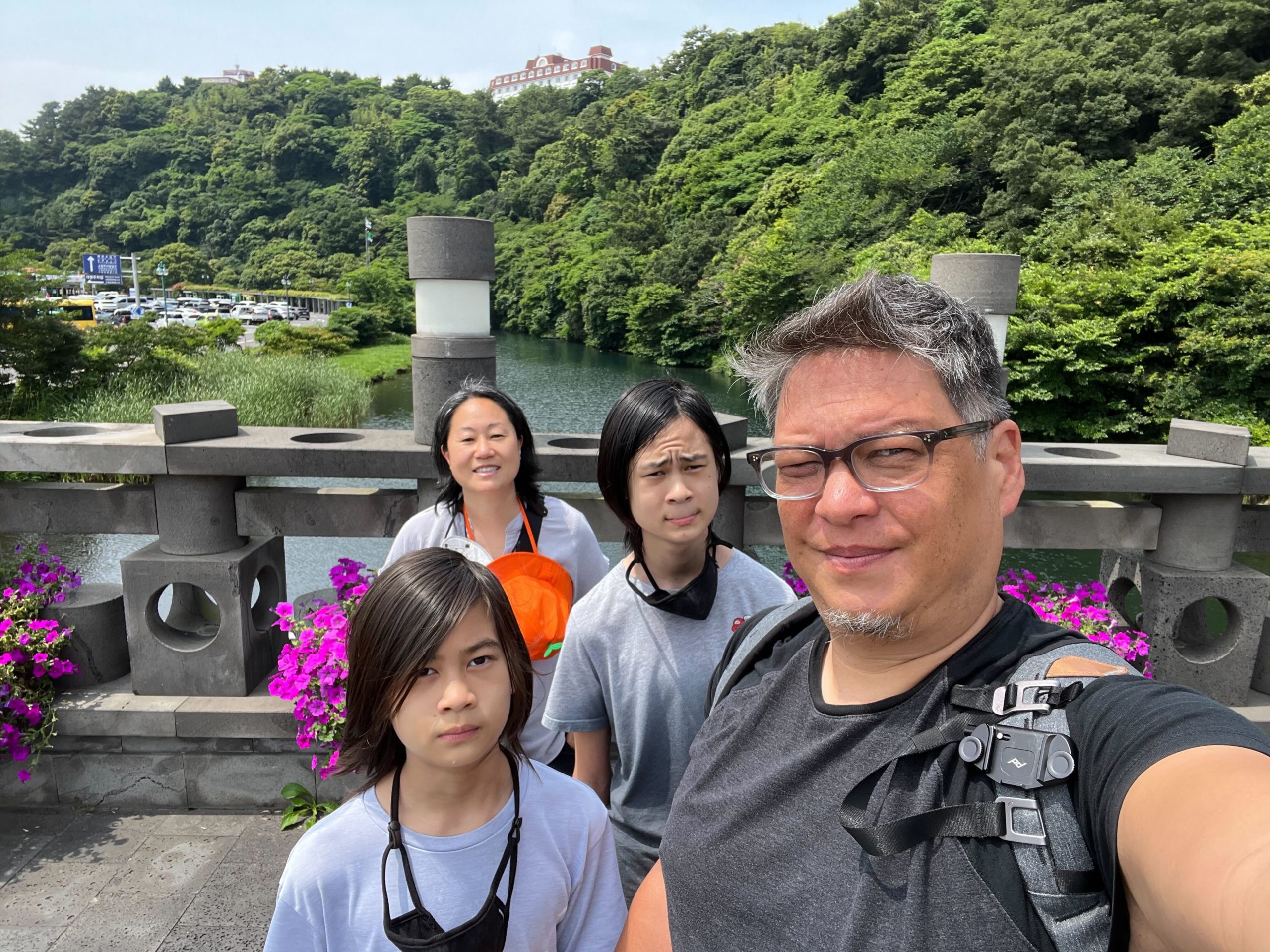
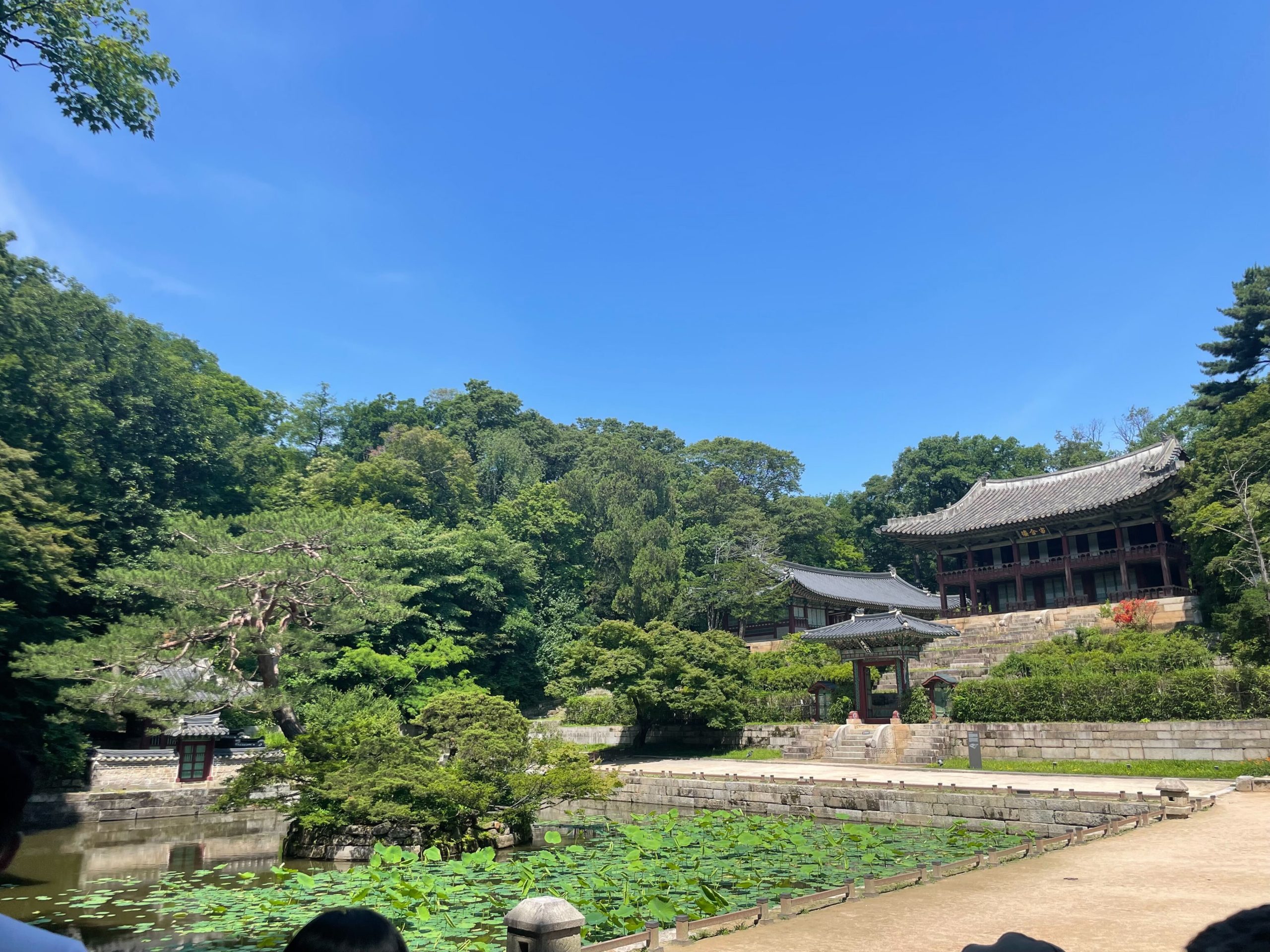
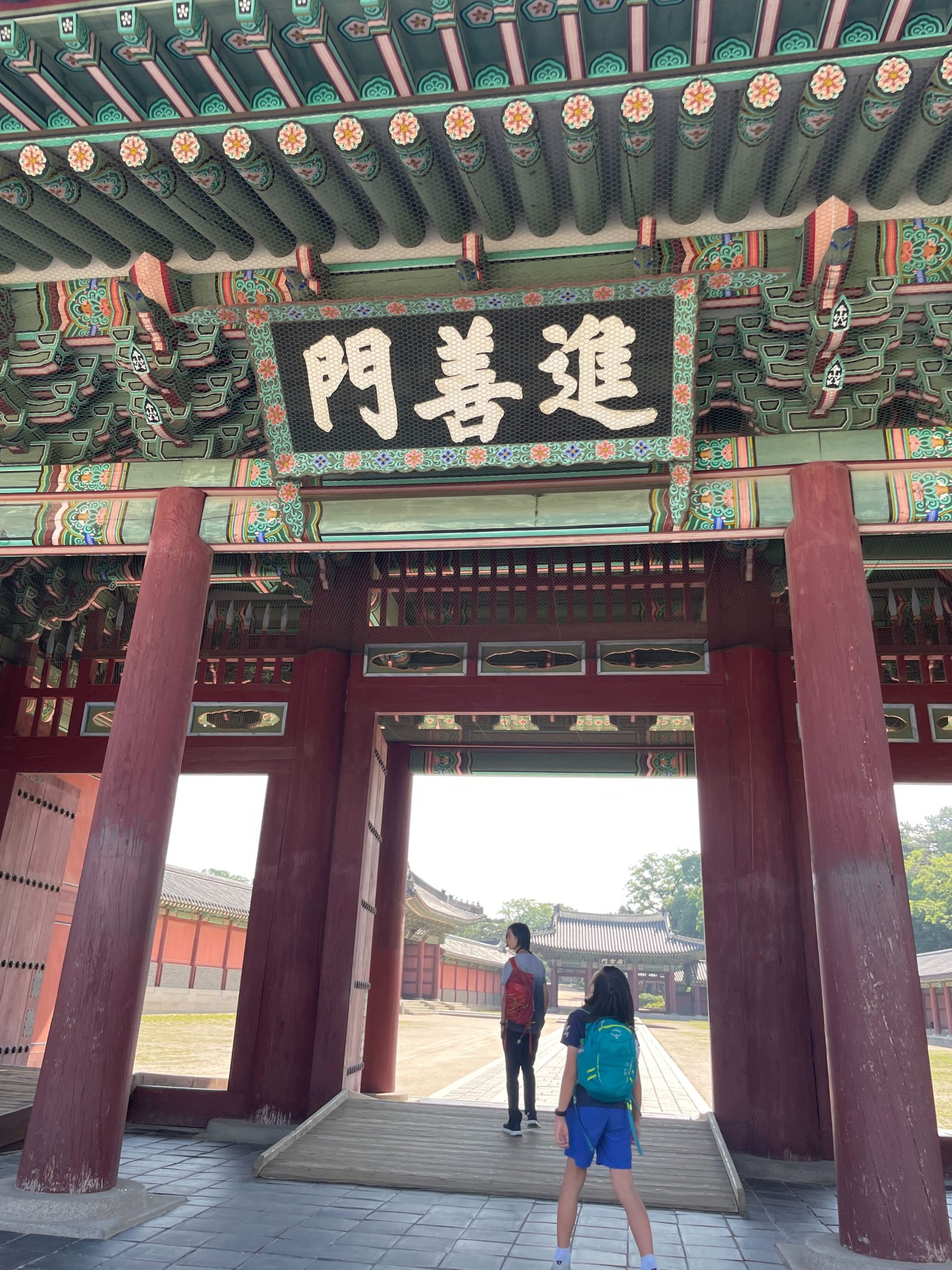
We went to a palace and toured around, which was rad.

The palaces’ paintwork was super interesting, and there was SO much of it. Maintenance must be a nightmare. There were also some neat details – roof “trim” that showed what seemed to be clear evolution from a dragon to a Korean – the way those t-shirts show cavemen evolving into people, then into computer nerds. We took an English-speaking tour of the palace’s garden, which was long, exhausting, but gorgeous and super interesting. You’ll see in a later post the difference between Japanese and Korean “palaces”, but the Korean one was very chill and serene.

We parked our big stuff in a locker, but I didn’t sufficiently empty out my backpack, and carried around way too much rando shit. I ended up very, very wiped out. But we finally checked in, and then collapsed in a heap.

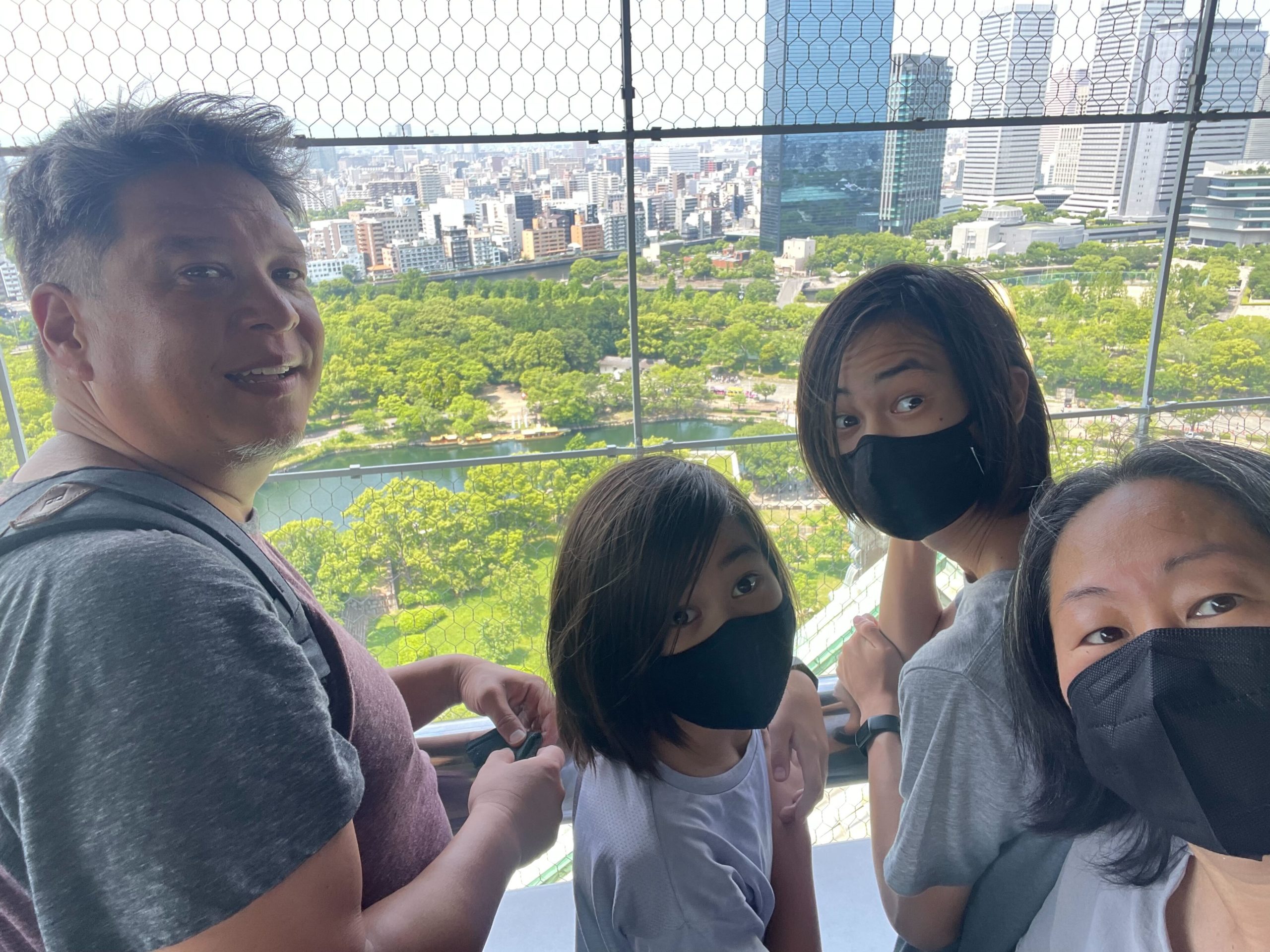
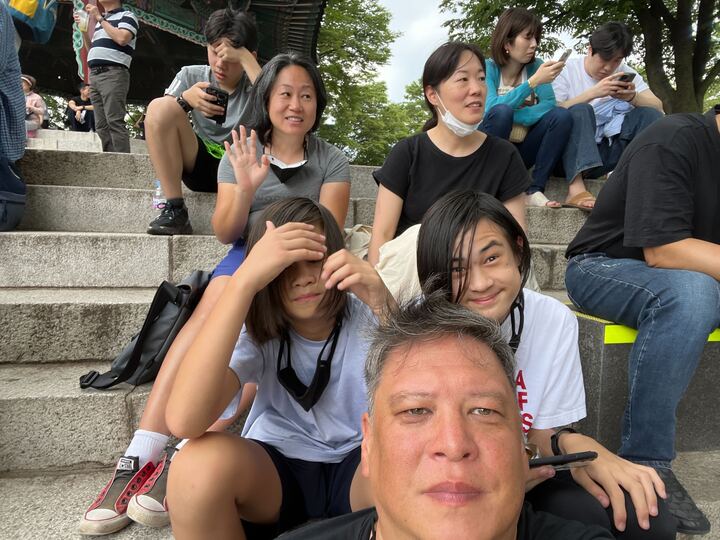
6/10 – At N Seoul Tower waiting for some sort of music/martial arts performance to start with Ei-Nyung’s high school friend, who lives in Seoul.

N Seoul Tower was super fun. The martial arts performance was super fun. Mostly katas, but then at the end they chopped a bunch of reed bundles with swords and polearms. The traditional Korean drumming was … very confusing. I kept trying to figure out what time they were playing in, and could not make it work.

I asked Ei-Nyung’s friend after the performance, because she used to play those kinds of drums, and she said that Korean traditionally drumming is always in a triangle. But it wasn’t 3/4, I think – there were parts that were in 4/4, parts that were in something else, constant tempo changes (which they all adjusted to immediately). It was really neat. But disorienting. And as with most “Traditional” drum performances, there’s a point where you’re like, “Oh, yeah – this is the rhythm section that gets you motivated to go kill your enemies.” It was great.

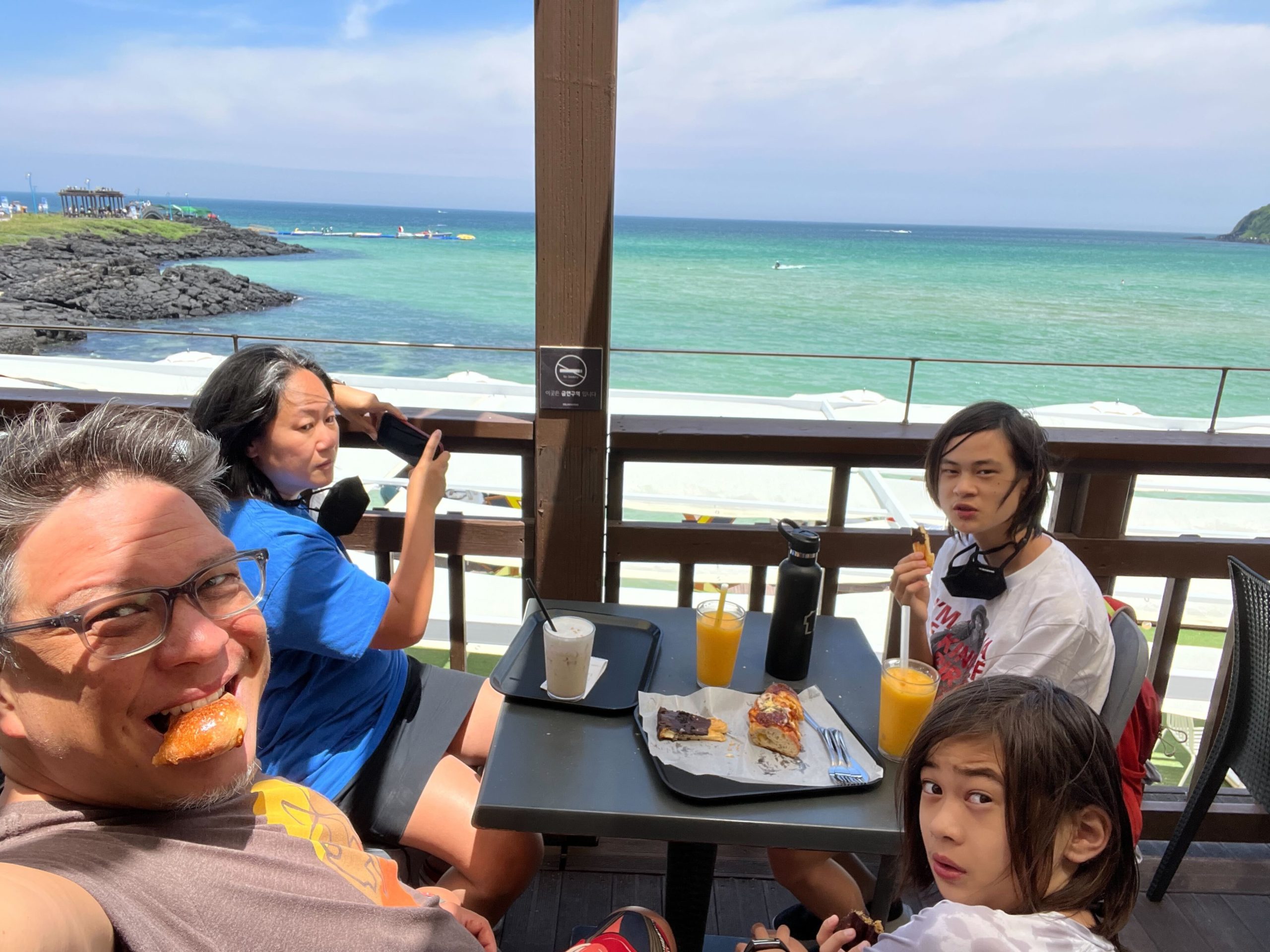
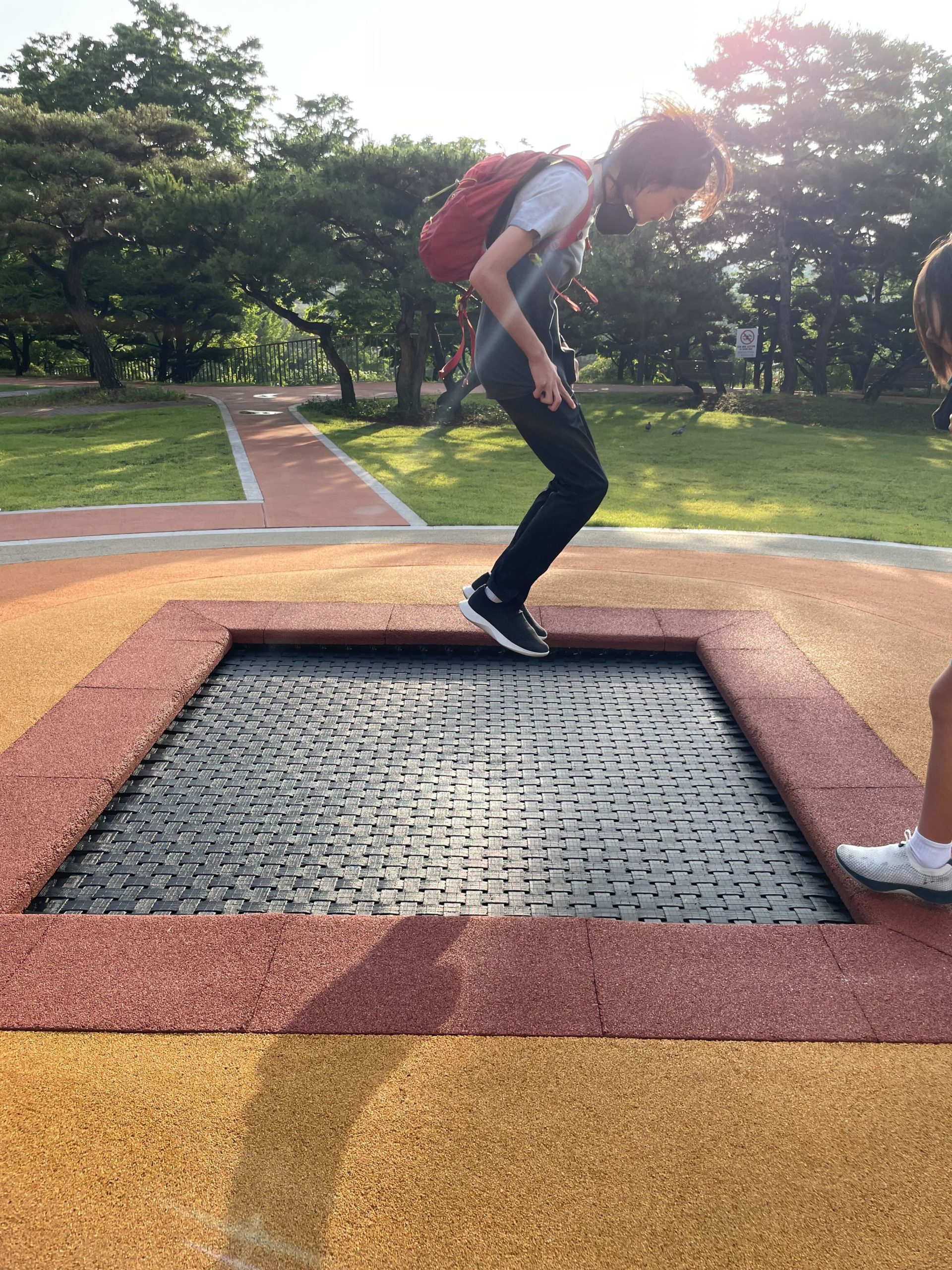
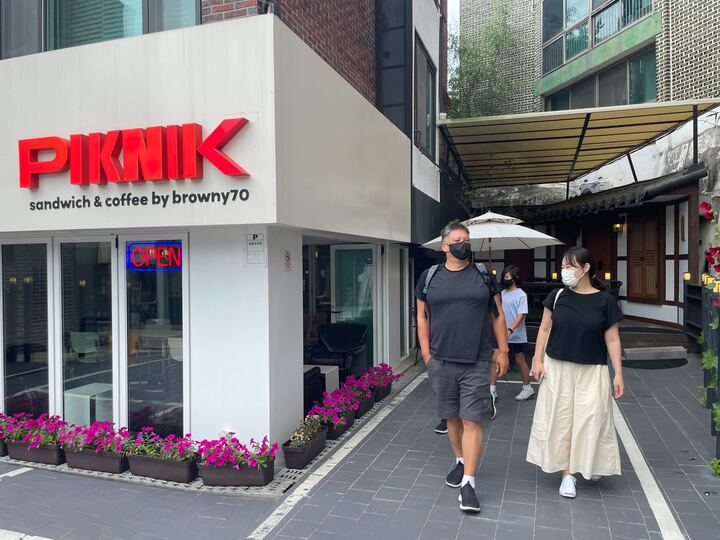
We wandered around the neighborhood a bit – ended up at this PIKNIK place to have breakfast. There are a LOT LOT LOT of cafes in Seoul. Like, in this neighborhood, we passed at least 50, while walking.

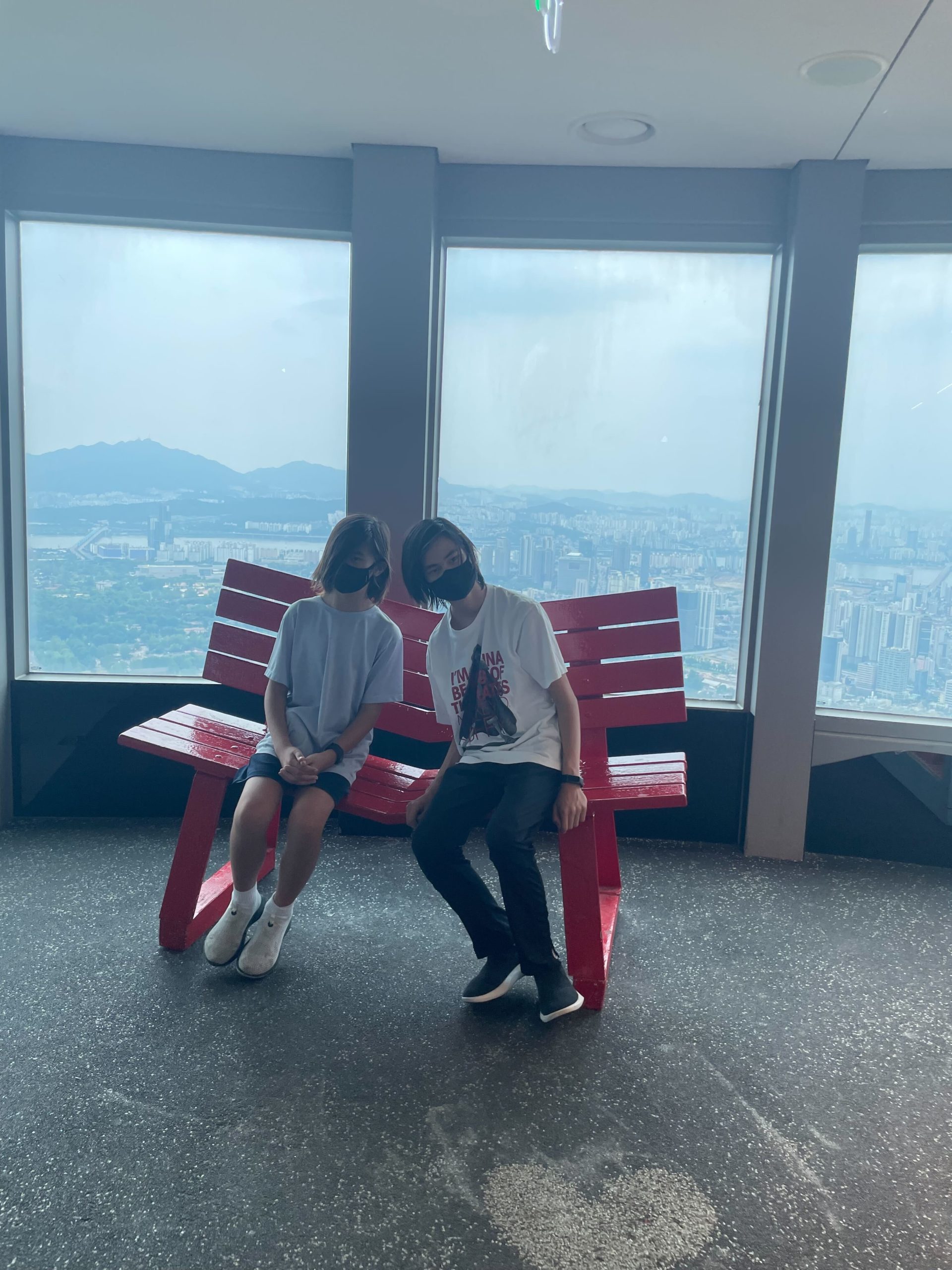
N Seoul tower had two things, aside from the usual ridiculous views that you’d expect from an observation tower.

1.) They had an array of massage chairs that were AMAZING. Legs, arms, back, neck, head. Huge pressure from little air bladders and textured fabric. Fantastic. 10 minutes for 1000 won ($1). Incredible. After all the walking, it was a godsend. We both assumed we’d get a massage in every single massage chair we passed for the rest of our time in Seoul, and technically, we did. We just didn’t see any more after this.

2.) The men’s room was the greatest bathroom I’d ever seen. The stalls were whatever. But the urinals were essentially right up against the viewing window without anything surrounding them. It was like you were peeing directly out of the tower onto the city from the sky. Brilliant.

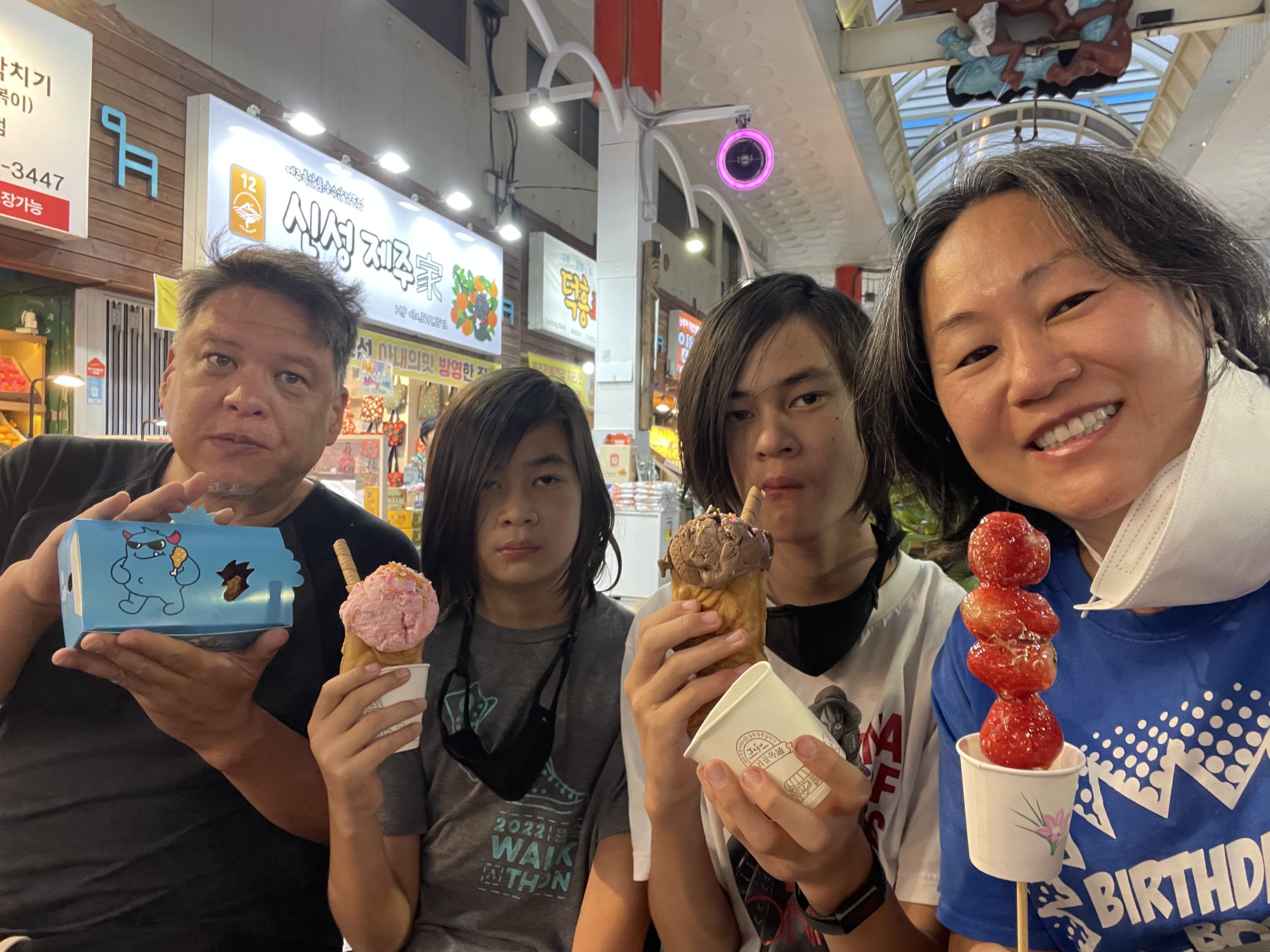
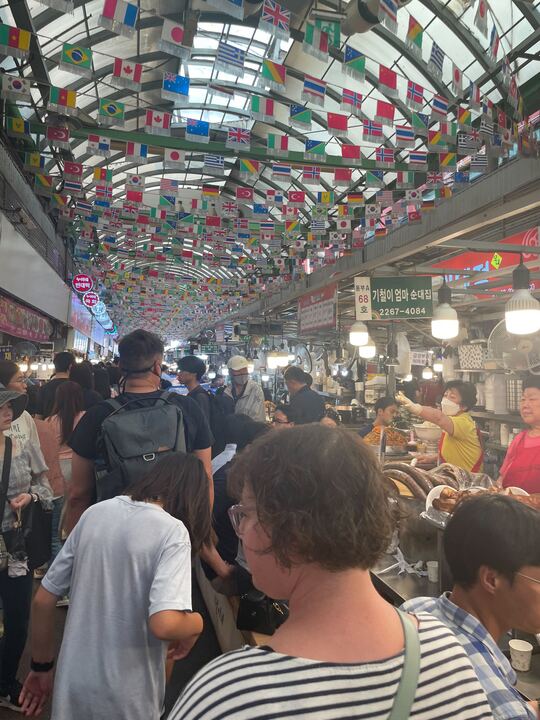
Then we ended up in Gwangjang market, which was… not. This is probably the low point in the trip for me (…which isn’t that low! But it’s also the only time I got actually upset from frustration & exhaustion and crowds and hunger).

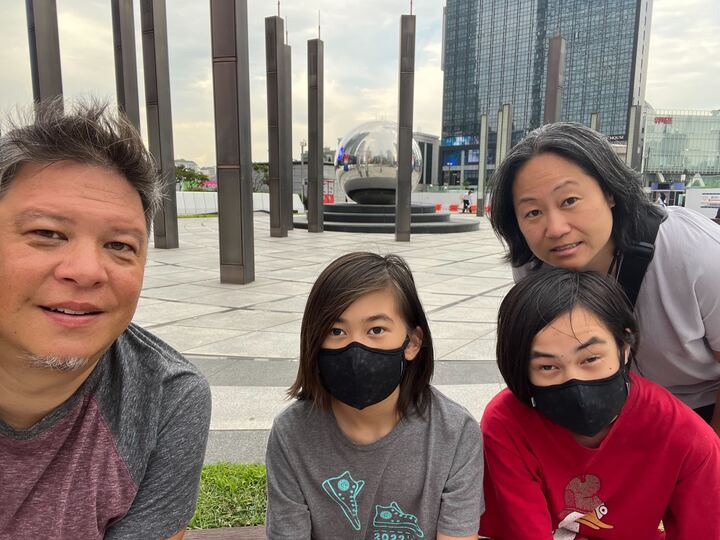
We also met up with Hannah, who you can see in the photo. But yeah – Gwangjang sucked. Too many stalls all serving basically the same things. Nowhere to sit. Too many people. No way to tell what’s good or bad or why or how, because everything is super overwhelming and crowded. Are these bindaeduk good? Or are the ones that look exactly the same, prepared in exactly the same way, in the stall right next to this one better? I have no idea. I have no idea how anyone could tell other than trying it. So combine a weird sense of analysis paralysis with HUGE CROWDS AND TIGHT SPACES AND NOWHERE TO SIT AND NEVER STOP AND WHERE ARE THE KIDS AND IT’S REALLY HOT and yeah – it wasn’t for me. At all.

6/11 –

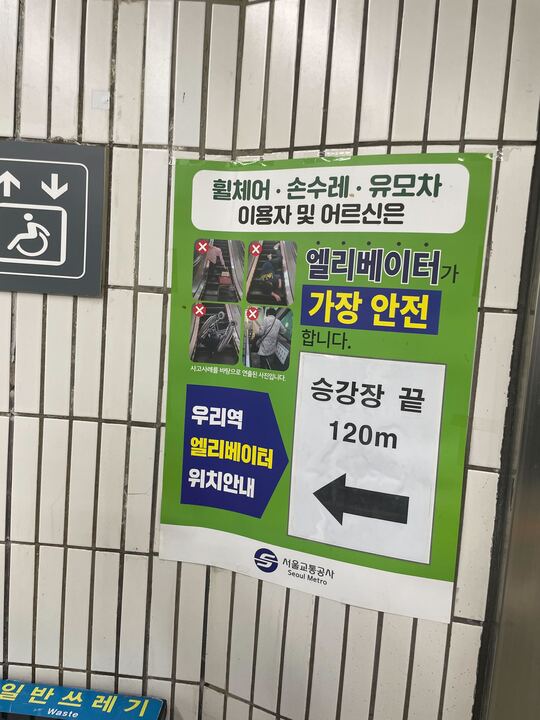
I think this might have been the best sign we saw in Korea. You have to zoom in and look at the pictures of how not to use the escalator.

We went to a place for breakfast called Bonjuk. It was really close (and my legs and feet have just been trashed from a lot of walking over the last two days). I’m not normally a huge fan of jook – it’s just … kinda there. And this is a chain. So even though I’d suggested it, it was more “Hey, here’s a pretty Korean-y breakfast, we should do it,” than “I am very excited about how this is going to be.”

It was GREAT.

It was bulgogi with a lot of garlic, and “Shepherd’s Purse”, which I’d assumed was gonna be some seafood that was euphemistically named or something, but it was just an herb – the green stuff in the porridge.

The rice was porridge-y, but not obliterated. It was like having properly al-dente pasta, where the rice had structure and bite, but was still rich. The meat was salty and very garlicky, in a way that really worked well with the porridge without being overwhelming, but cancelling out the “boringness” of rice porridge.

The kids had a beef & seaweed version, which is like miyukgook, a soup that Ei-Nyung makes that is delicious. And she got a chicken & ginseng version, which was also very distinctly different and delicious.

Yeah, I was super impressed.

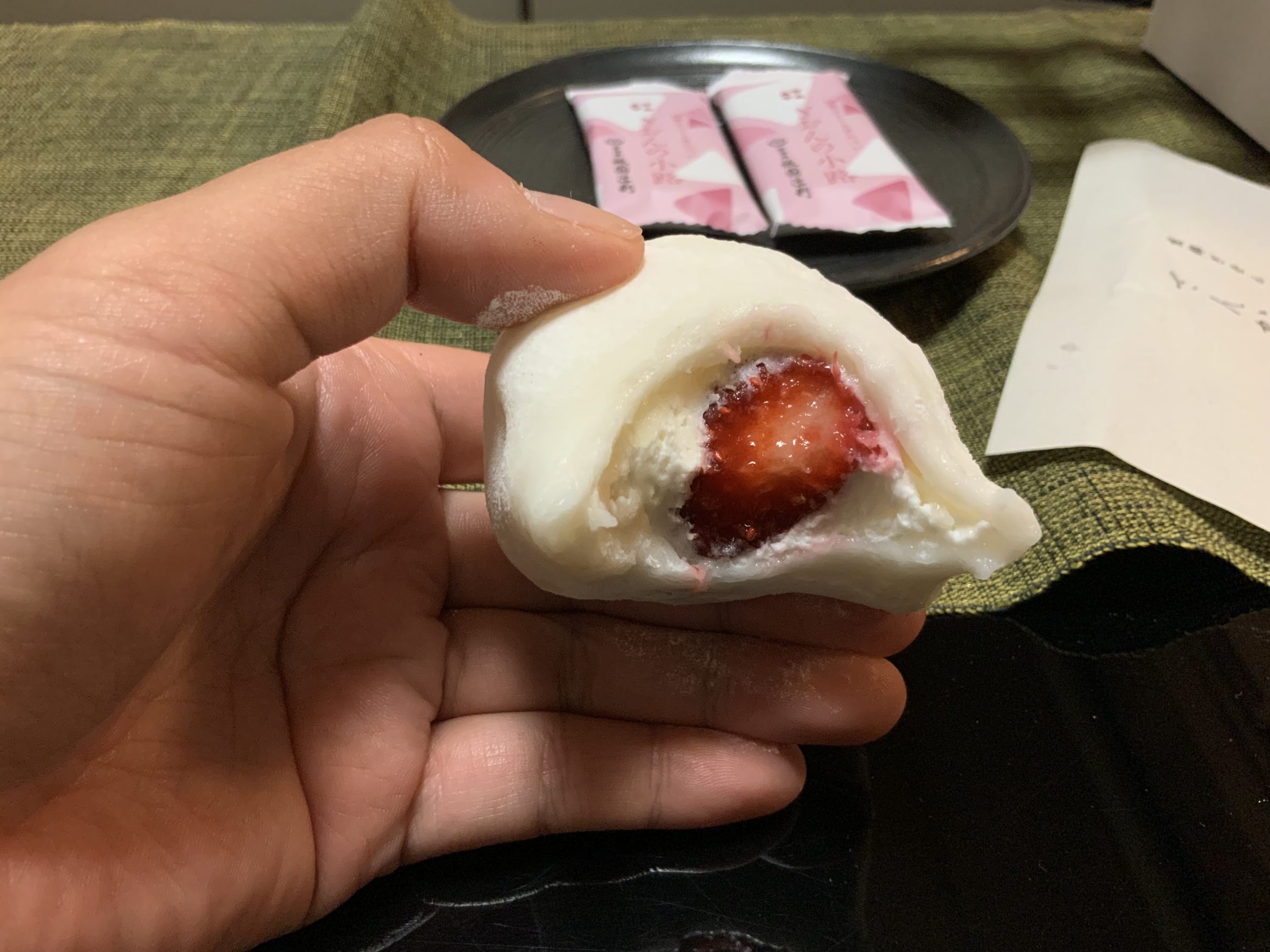
Then we went to a VERY INSTAGRAMMY little mall, and I got a shirt. We also went to a tiny cafe & got drinks. There’s strawberry milk everywhere, and some areas where there are like five independent cafes on every block. It’s bonkers. Ended up also getting a traditional-ish Korean dessert, which is a bit of what looks like corn syrup (traditionally honey) that’s then coated in corn starch and hand-stretched a bunch of times until you get like 2^14 little tiny strands of sugar, and then they wrap (filling) in a layer of the cottony sugar stuff. It was a whole rehearsed sales pitch for tourists, but ti was still a VERY GOOD sales pitch, and I was gonna get it anyway the moment we walked over to the stand, so I didn’t feel like I was coerced into something. 😀

Ends up looking like a lot of little cocoons – usually filled with nuts, but since Jin’s allergic to walnuts, we got them with smashed Oreos & chocolate. They were GREAT on the spot, but definitely worse as time went on. Did not age well. Apparently they’re called “Dragon’s Beard”.
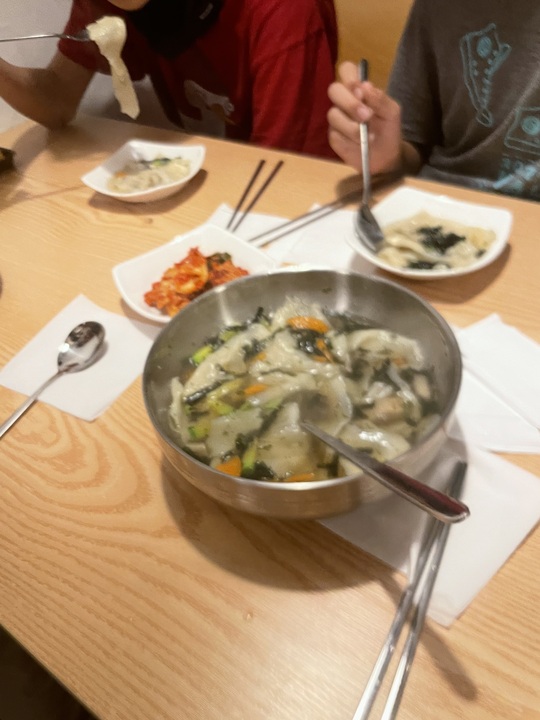
6/12 – Breakfast this morning was a vanilla latte and this, which is “sujebi”.

It’s an anchovy-broth soup with vegetables and torn dough pieces. Really good, and like yesterday’s porridge, something I enjoyed quite a bit more than I thought I would.

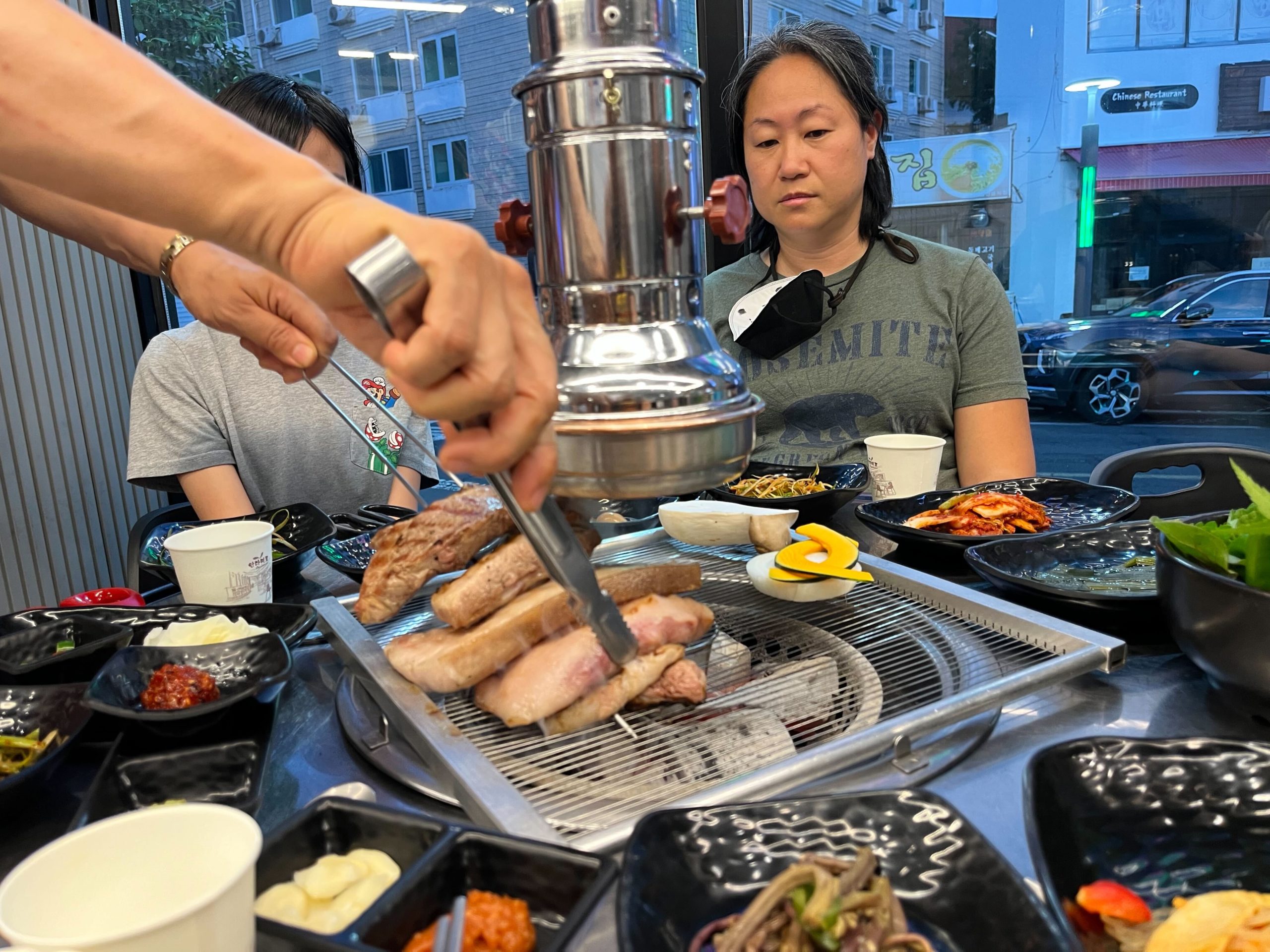
And a little variety of fried chicken from last night. We went to a food truck gathering at the Han riverside over by Gangnam, which was clearly the rich part of town. Obvious from say, Lamborghini Urus sighting, and a bunch of people riding very expensive bikes on the bike paths. The chicken was alright. Soy garlic, yangnyam (spicy and sweet, this is when done well, my favorite fried chicken), and a bunch of fried chicken skin, which was GREAT, except that it was coated in honey butter sugar, which was way too much, and made it kinda blah overall. But it was really nice to sit outside riverside on the grass. As crowded as Gwangjang was, while this was a well-attended collection of food trucks, the crowds were somehow not overwhelming.

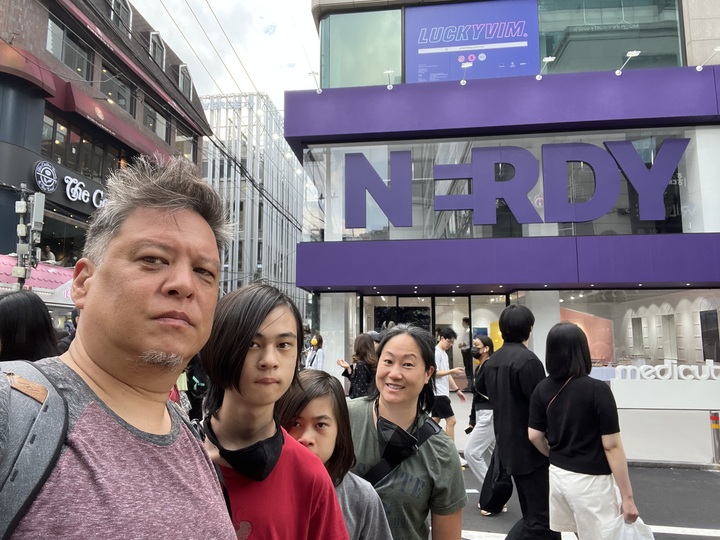
Self-explanatory. Over in Hongdae, where we went yesterday, which is like “fancy, hip, $$$ Telegraph Ave” for the Bay Area folks.

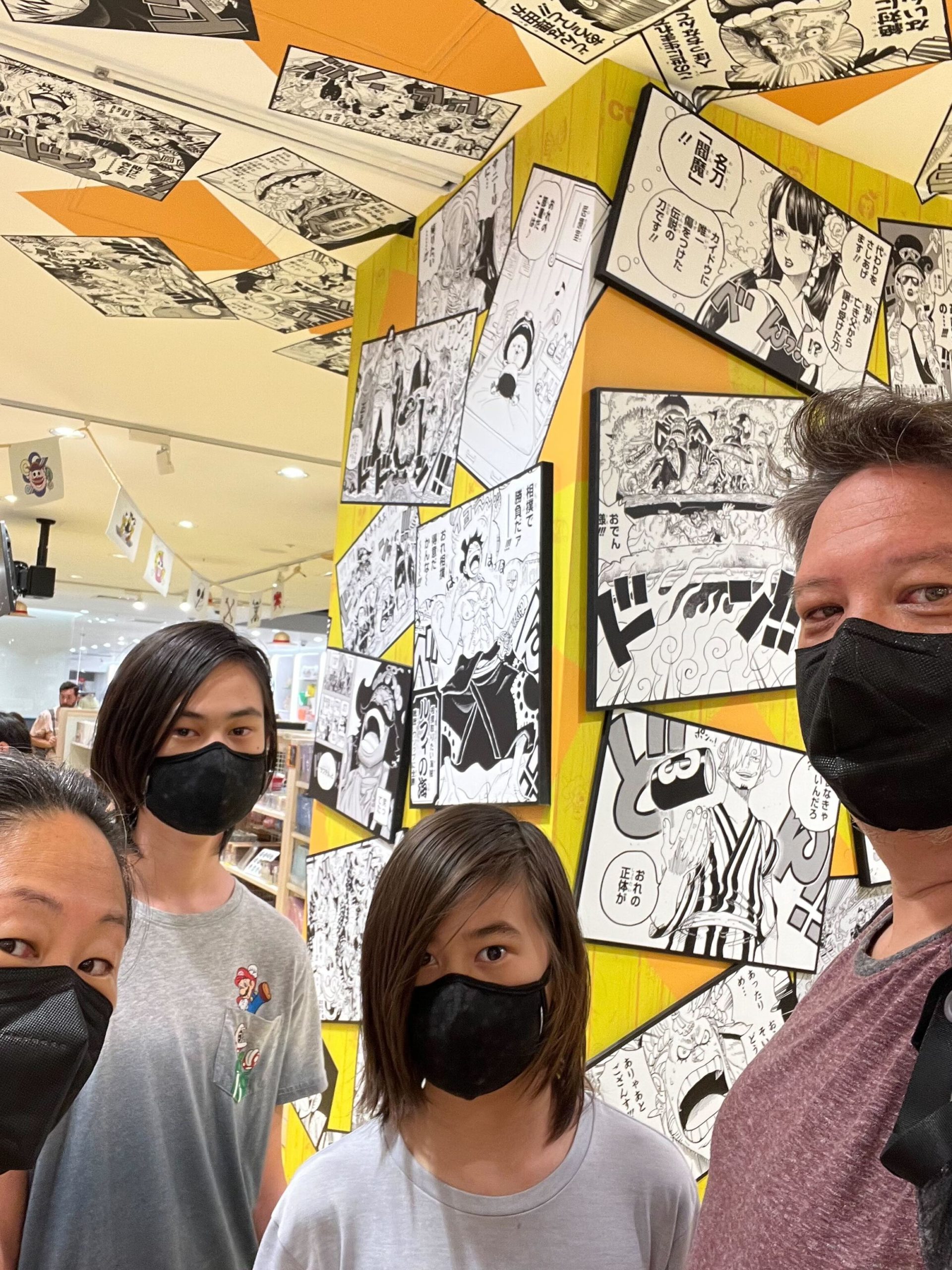
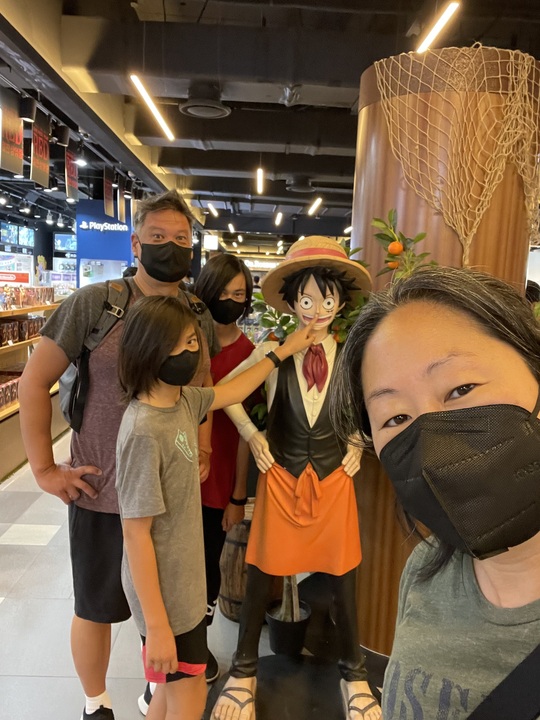
There used to be a “One Piece Cafe” in Seoul, which had a full-size replica (or at least something akin to it) of the Thousand Sunny, but unfortunately, that closed permanently a while back. They moved some of the stuff to a new place in Hongdae called “Play One Piece”, which is a merch shop.

Sadly, it wasn’t all that well stocked – or was stocked with later stuff in the storyline, which didn’t resonate as much with me. A lot of what they sold were figures, some of which were neat, but also bulky – we’re not gonna carry stuff like that around for 2.5 more weeks.  So that was a bummer, but it was still a neat place to go check out.

Kids and I went to the CoEx convention center/mall to meet up with @eingy. It was comically huge. Went to the aquarium, which was surprisingly decent.

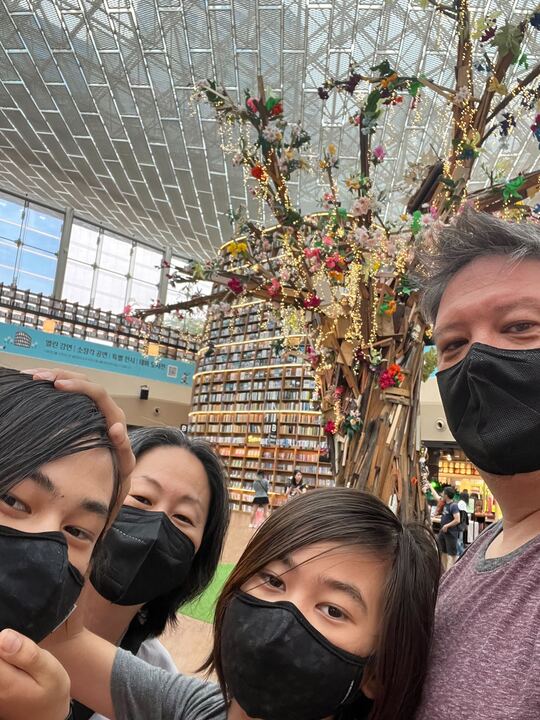
The CoEx “library”. Apparently a real library. We also went to the CoEx aquarium, which was surprisingly decent. I’ve never seen an aquarium with meerkats and beavers, though. Pretty weird.

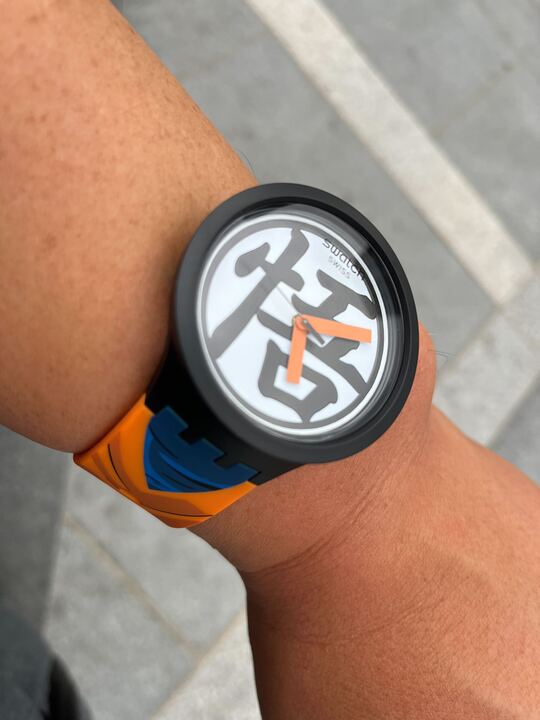
I also got a watch at CoEx. Weird to get a Japanese-themed watch in a Korean mall, but I’d never seen this Dragon Ball watch before, and this is very much an “If you know you know” kind of thing. Super, super obvious to any Dragon Ball fans (ran into one much later in the trip at the Kirby Cafe who commented on it positively), but if you don’t know, it’s just a weird kinda loud watch. 😀

Also, about half the taxi drivers in Seoul are out of their fucking minds. And yet seem to not have their cars utterly destroyed, so… yeah. But between a guy persistently doing 40% faster than the speed limit, someone who only binarily modulated the gas, and a dude who (successfully) basically pushed a bus out of the way in a lane they were already in… taxis were an ADVENTURE. They’d either be staid and normal or completely insane.

I would love a guided architecture tour of Seoul. It’s full of neat buildings. Ei-Nyung’s friend was talking yesterday about how there have been politicians who have pushed for big splashy “event “ architecture, and how it created a lot of tension with residents who wanted more spent on services.

…while I agree that money would be well spent on those in need, there’s no question that Seoul is an internationally top-tier city as a result, and if the focus was solely on pragmatism without a bit of showy nonsense, the city would be measurably worse. I dunno. It’s a weird balance. You spend on some flash, it attracts international attention & investment, the pool of money you have to spend grows. Does it ever actually get spent on those in need? Do they spend more as a result? I have no idea.

Quality art.

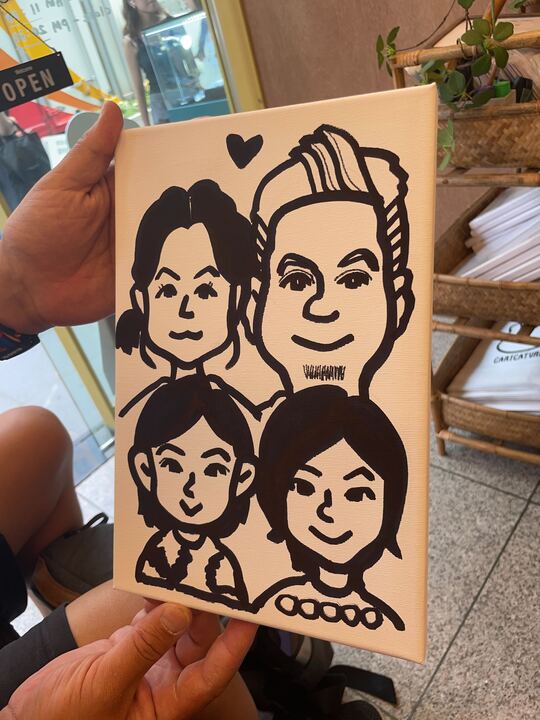
I’m surprised at the number of unmasked folks in Korea. I’d expected more. Seems like maybe 30% indoors, 10% in crowded outdoor spaces? We ended up getting caricatures drawn at a place that had a very distinctive style. Turned out alright. I think she captured Jin really well, but Kuno’s not super recognizable to me.

What Work Looks Like

When I left my last job, I thought, “Boy, I’m glad I’m not going to have to figure out what ‘work’ looks like after the pandemic.” But I’ve now got a potential opportunity, and have to actually at least give this some serious thought.

For me, there are a few things that I’m certain of:

* It’s not going to be 40-hrs a week in an office. Never. No chance.
* It has to provide enough flexibility that anyone can go pick up their kids at school, or attend whatever events they need to.
* Periodic in-person time together, and the riffing on ideas that comes from that, is an important part of the early phase of product development.

So no daily commute. Maybe one weekly. Probably not folks who are spread across the countries & time zones, at least not yet. Some overlapping guaranteed hours, but with the goal of providing a lot of flexibility.

For me, the thing I *love* about work is bouncing ideas around and seeing them get better. Creating memories with people I enjoy spending time with. The satisfaction of seeing the business engine start to crank, and seeing players enjoy what we’re building.

I think that for me, work is likely “nearby enough to meet once or twice a week, but mostly remote”. I don’t yet know the details of what that means, but what are your thoughts? I know a lot of folks who’ve gone fully remote and love it. Thoughts? Would you ever consider even partially co-located work at this point?

Web3, ‘Interoperabillity’, and Obvious Scams

You know the phishing e-mails you get that are full of bizarre spelling errors? Part of the purpose of those is to weed out the people who aren’t going to fall for the scam.

When someone talks to you about web3 games and uses the phrase “interoperability”, I want you to think of that as the exact same thing.

It’s something that sounds good on the surface, but if you know anything about game development, it falls apart immediately. Web3 “interoperability”, where you can take an NFT from one game and use it in another? No one’s going to do that. There’s no financial incentive to do so. It’s fundamentally not how games are built. And not just traditionally – even if someone fully embraced web3, there’s no incentive to ever make something that takes an NFT that someone bought elsewhere and create content for it in your own game.

So when someone says, “Yeah, man – you can buy this magic sword NFT, and when you get bored of Game X, you can take it to Game Y where it’ll be a super valuable house! How awesome is that?” what you should hear is, “I either know absolutely nothing about how games are made, or I think you’re stupid (or ignorant) and am trying to sucker you.”

They are literally the same thing.

The Ride of a Lifetime

Read through Bob Iger’s book, “The Ride of a Lifetime” and really enjoyed it. He’s a good storyteller, and a lot of his “leadership lessons” are things I want to have confirmed by someone of his stature, so … yeah, I liked it a lot.

One thing that struck me, though, is that Iger fairly deftly understood how streaming and other tech was going to disrupt Disney’s distribution channels. I don’t think he’s going to be CEO of Disney really long enough to ride the whole next wave, but I think whoever succeeds him will have to have a really good understanding of how much tech is about to change content creation.

I think we’re many years off from machine-written scripts – but what I think AI can do is essentially “Rapid prototype” entire movies, where you can stuff a script into it, and get some basic performances/visuals out quickly – like, faster, more detailed, moving storyboards. It won’t replicate the hand of a director, or the nuances of human actors (at least not yet), but I’d be very surprised if a lot of preproduction steps of films validate scripts and ideas by quickly turning them into like… “quick renders” of scripts that are largely done by machine.

And then you’d have a director essentially work with some folks to “tune” that quick render so it more closely matches their vision, and you’d invest time in specific sequences to flesh them out in more detail. But I expect you’ll get to a point where you can have a pretty phenomenal pre-vis of your movie by just using off the shelf tools.

Maybe the way tech will be disrupting content creation will be totally different. But that seems like a plausible path forward to me, and I think, again, that the best uses of tech/AI will be those that are *driven* by artists, and refined by artists.

The Last of Us

Avoiding the incoming crush of story spoilers due to the TV show was the impetus for me to finally get through The Last of Us after 3 attempts. I’ve bought and played every version of the game that’s been released, and this is the first time I’ve finished it.

What a ride. What a game.

The first time I tried playing it was in 2013, right after my second son was born, and that opening was absolutely crushing. It’s so good, but it also sets the emotional stakes *so high* that as a new parent, I couldn’t bear it. Once you get to the clickers, the stress level was through the roof as well, and tired, constantly running on empty, and then essentially having my professional life turned upside down at the same time… I put it aside for years, and didn’t pick it up again until the PS4 version, which I got well after its release.

And that opening. Hit just as hard. Stress level just as high. Made it further over the course of the next few years – about 1/3 of the way in, but then put it aside again. It was an extraordinary experience, but so tense that between parenting, my dad’s accident, startup life, I just couldn’t add any more stress to the equation, even fun stress, without breaking.
So it wasn’t until this time around that I finally got through the whole thing. And I’m glad I was able to do it without any major spoilers. Turns out some things I’d thought I’d heard re: spoilers weren’t what happened, so that was a bit of weird subversion.

But yeah. Also weirdly prescient re: pandemic life and peoples’ responses to it. I’ve never seen more fleshed out characters than in TLOU in any videogame. Even stuff like Mass Effect, which spends a lot more time with the characters. TLOU’s linear story allows for a lot more control and detail, and it makes for really rich, interesting, layered characters that have the depth to evolve while still being … true to themselves.

What a ride. What a game.

What’s Next??

When I think of “what’s next”, the genuine answer is, “I don’t know.”

I think AR will be world-changing the moment someone figures out how to do a socially-acceptable AR thing. I’d thought Apple was poised to do it, but it sounds like maybe it’s not coming any time soon. The Reality Pro rumors are interesting, and I’d certainly buy one, but it’s not the AR nuclear bomb going off. Not yet.

I feel pretty safe in saying it’s not “web3/blockchain”. I’ve spent months thinking about it, and find it so utterly uncompelling and pointless that I’m genuinely confused about what I’m missing. But everyone I’ve asked for help understanding has basically said some variation of the same things, which are all nonsensical to me. (To be clear, this is me being diplomatic. I understand why a company would get in on it, as investment money is there for the taking, but I haven’t heard a web3/blockchain gaming proposal that has *any* utility to the actual player.)

I do think, though, that the answer to “what’s next” is somewhere in the sea of people who just got laid off. Whether it’s some team within Meta that was pushing hard for something creative that didn’t fit the plan, or some folks in Google that was doing something strange, or a frustrated Hololens engineer… it’s probably not even anyone I expect, working on anything I can conceive of. But it’s out there. Bubbling away.

In 2008, when I got laid off from the company I worked for, the opportunity was there, and I saw it. But I wouldn’t have *taken* the chance if I’d still had my job. It was getting laid off that enabled me to co-found Self Aware Games.

I took the shot because I had nothing to lose, and the financial and social security to do it, along with the ticking clock of my first son’s impending arrival, which meant we knew how much time we had to make it work or it’d be over.

I imagine there are a lot of people out there who don’t want to put their fate into some huge corporation’s hands again. Folks whose severance gives them a bit of padding, and their specialized knowledge about cutting-edge stuff gives them a window into the future that few people have.

I’m super excited to see what comes out of it, and I know it’ll be something none of us expected.
Pain

There’s a bunch of studies about pain that show that the intensity of your recollection of how painful something was isn’t about the maximum pain you felt, it’s about the *last* pain you felt. A surgical procedure that goes on longer, with *higher* maximum pain, is recalled as though it was less painful if a superfluous low-pain thing is added to the end of it.
I’m hearing a lot about folks who were let go from companies after long tenures in terrible ways. Cut off from their communities without a chance to say goodbye or get closure or grieve with friends and teammates.

So add on that low-pain thing at the end. Find the people you want to say goodbye to and say goodbye. Organize a last lunch, or a small get-together. Reminisce and grieve and cry and laugh and whatever. Make that your last memory.

My last three jobs have ended in ways that were painful, and I was never able to get any kind of proper closure. You may want to walk away and never see your team or be in that environment again after having been treated poorly, but you have a choice how to end things for yourself. A little bit of effort to put a nice bow on it, and a great side effect is that your long-term perception of how badly things “actually” ended will be significantly reduced.

Read Only Memory

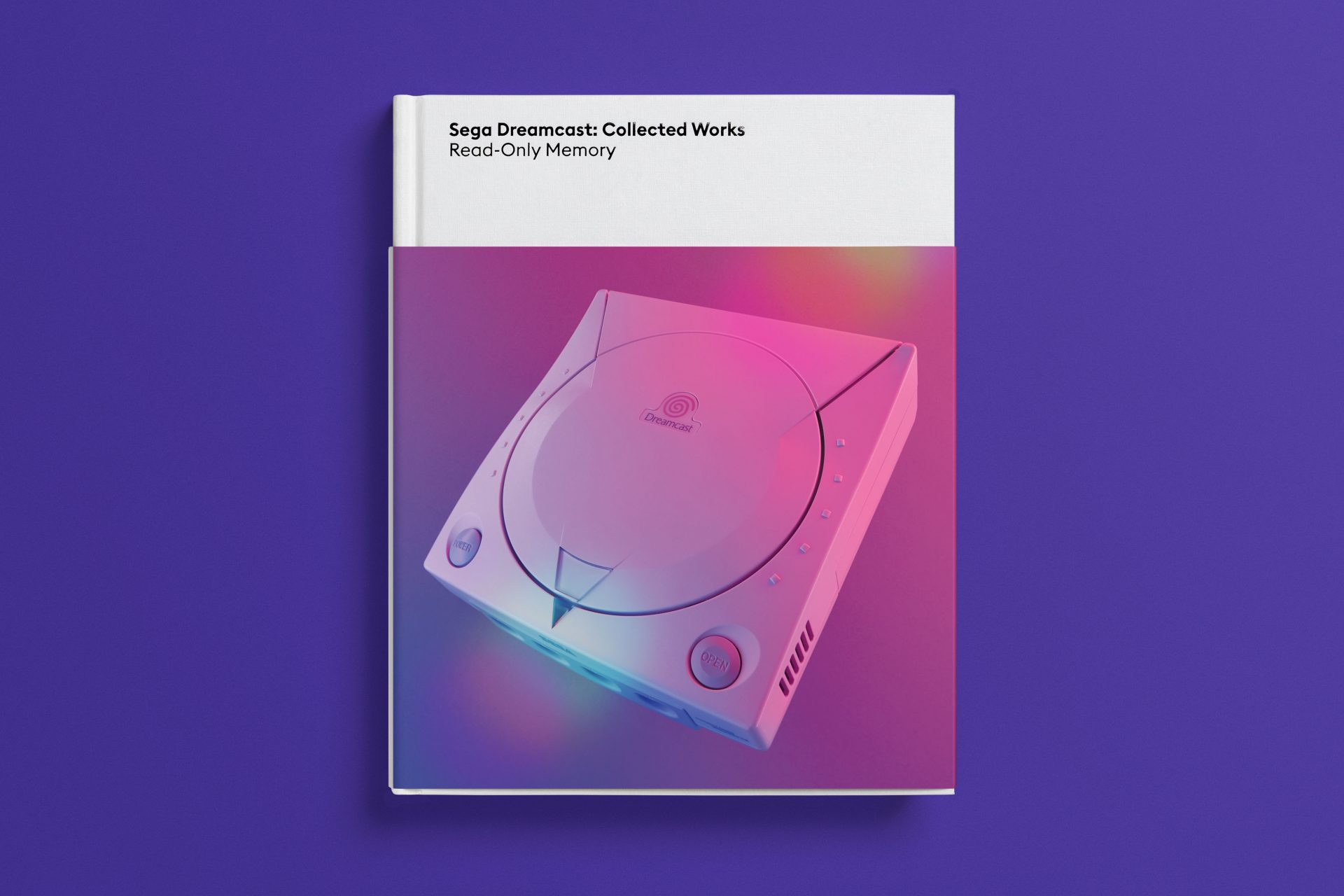
I picked up a book by Read Only Memory – a beautiful retrospective on the Dreamcast – and it’s a delightful trip down memory lane. The DC remains one of my favorite consoles, and it’s the only “classic” console that I regularly play.

Not only that, but some of my very best friends to this day were from my time working on Seaman, and from a DC-focused online message board from the era.

From that perspective, the Dreamcast has had a surprisingly significant impact on my entire life, and earned a meaningful place in my heart.

Startup Advice

Running a #startup for the first time? Here’s a few bits of unsolicited advice from someone who’s been there a few times. Most of this is relevant to software development – there are some things that can be different working with hardware or other things with longer lead/iteration times.

1.) Secrecy doesn’t matter. Until your product is successful, it’s not worth it for anyone to care about it. If you’re pre-product/market fit, you shouldn’t hesitate to tell anyone you think can help you what your idea is. Don’t bother with NDAs. Don’t bother with patents. Nothing will protect you better than speed. Secrecy and speed work against each other.

2.) Don’t worry about competitors. You may hear of someone doing something that on paper sounds exactly like what you’re doing. That’s fine. It’s easy to get scared off of a concept when this happens, because you’re worried about losing first-mover advantage. But in most things, first-mover advantage doesn’t actually exist. And literally everything I’ve ever worked on – someone’s out there trying to do something similar. But it’s never *the same*, because no one has the experience and perspective that you do, so if you’re trying to solve someone’s problem, you’ll do it in a different way than anyone else. And those differences are what will differentiate your product, not the high-level thing that your product is doing. So if you’re working on a tool that auto-annotates meetings and follows up with important tasks, and you hear someone else working on something that sounds similar – don’t sweat it. Your products will almost certainly be totally different, and prioritize different things.

3.) No, really – don’t worry about competitors. Early on, some folks do a lot of “competitive research” to figure out the features your product needs to have before launch. If you’re doing this, you’ve already lost, because you’ll always be months, if not years behind the competition. All you need to do is focus on the problem you are trying to solve for a particular audience, and understand what that specific, small audience needs to have a great experience. Stuff that already exists that you can see in your competitors’ products? They’re basically “solved problems”. If you’re building something new, you have “unsolved problems” that you absolutely need to address first.

4.) This is the tough one, because very few people know how to do it correctly. But prototype fast, and test with real users as soon as you humanly can. And I don’t mean “build a shitty version of your thing” or “build something janky and busted that doesn’t do the right thing.” Building a honest-to-goodness minimum viable product that will *answer the questions you need answered* about whether you’re building something someone desperately needs – that’s a very tough challenge, and it’s *very* specific to your product, what you know about your audience, and what you don’t. There is no boilerplate answer for “what features are necessary for an MVP” that you can steal from someone who’s done this before. It requires deeply understanding your potential audience, and deeply understanding what you’re trying to do, and then finding out what you don’t know in order of “biggest risk” on down.

In addition to the base complexity of trying to understand what a real MVP should contain, you’re also fighting everyone’s existing process, training, and how they evaluate whether something is “good” or not. By most metrics, MVPs will be “bad” products. They shouldn’t be robust. They shouldn’t be pretty. They shouldn’t scale. (Of course, those statements can be wrong if your product specifically is focused on one of those areas, and for some reason that’s the thing you need to get answers about.)

Great artists are great because they make great art. Great engineers are great because they write great code. By whatever definition great is in your field. But a great MVP is evaluated by if you’re getting great, actionable, understandable *information* from your target audience. The information doesn’t even need to be *positive* for your MVP to be doing a great job. If you are learning things you didn’t know before, and couldn’t have known before, then your MVP is doing a great job!

It’s a way of thinking of greatness that is surprisingly counterintuitive, because you will feel bad about showing it to people (because it’s not “great work” by a traditional definition) and you will often feel bad about the data you get back (which is that your first iterations of your MVP are showing that users are NOT responding to your product the way you thought they would).

But imagine if you’d spent three years working on that product, and *then* users didn’t respond the way you thought they would. Then your company would be dead. So if you’re learning, and creating actionable data, and gaining a better understanding of your audience and product, the MVP is doing its job.

Learning fast is 100% of a startup’s job in the early days. Every decision you make as a #leader should be geared toward maximizing how fast you can learn. Usually that means maximizing iteration speed and minimizing risk (which can mean building infrastructure that doesn’t feel like “product” at first!), so that you can learn quickly.

If you’re doing this for the first time, and this all sounds wrong to you, DM me. Let’s talk. Because *so* many startups make the same mistakes – they keep things under wraps. They spend years building before showing anything to anyone. They trust their own judgment and insight. And then they launch and are dead in months.

There is no more expensive and wasteful mistake than building the wrong thing. Learning fast with real users is the absolute best way to make sure that doesn’t happen. It may be the only way.

Leadership & Counterintuitiveness

When you’re in a position of leadership, there are a lot of things that feel counterintuitive. A lot of your “natural” responses will be wrong.

When something goes wrong, you may get upset, frustrated, or angry. This was “fine” when you were an IC, but *fatal* when you’re a leader. This trains people to not tell you when things go wrong, and every single time it happens it will have ripple effects that will last for years.

Take a breath. You don’t need to solve this instantly. If you need to, try, “Thank you for telling me this. Give me a second to digest things before we move forward,” then take a walk around the block, or scream into a pillow behind closed doors, or whatever. But your public-facing response, and your response to the person who told you whatever catastrophic news is positive, grateful, constructive. Because you *want* people to come to you with bad news, from small bad news to company-destroying catastrophic news. And if they’re scared of your response, they’ll hide bad news from you until it’s too late. So even if you can’t do it in “real-time”, ask for a moment to process things, go freak out in private, and then come back ready to solve problems.

This is hard to do. You will fail at it, and freak out in public. That’s alright. It happens. But do your best to keep your responses in check, because this is genuinely one of the most important things you can do as a leader – be open and positive and constructive when you get terrible, terrible news from your team.

This doesn’t mean you can’t hold people to account. It just means that you do it *after* you’ve addressed the immediate crisis. Because often the problem isn’t quite where you think it is, and the problem is rarely with the messenger.

So yeah – that’s the big one, but the obvious one. For one that’s weirder and less obvious (and will make you a bit paranoid until you learn to live with it)…

When you tell jokes, people laugh. This is feedback that tells you you’re funny! People like you! You should tell more jokes!

But laughter is sometimes a genuine response to humor… and sometimes it’s a social signal that you’re in the in-crowd. Yeah – people are laughing not (just, maybe?) because you’re funny, but because you have *power*. And it’s really easy to overlook this, because it *feels* good. People listen to you. They pay attention. Because you have good ideas, and are charismatic… and(or?) you have power.

You feel validated in speaking up, because people listen. They respond. They laugh. So you speak up more. You interject. The feedback encourages you to do more.

But a lot of this feedback is social validation of your *power*, not (just?) the quality of your ideas or humor.

What do you do about that? Nothing. Just keep it in mind. Question whether you need to talk or not. Whether the positive feedback you’re getting is because your ideas are good, or because you happen to be up in the hierarchy. If that’s all you do, you’ll do a better job than most.